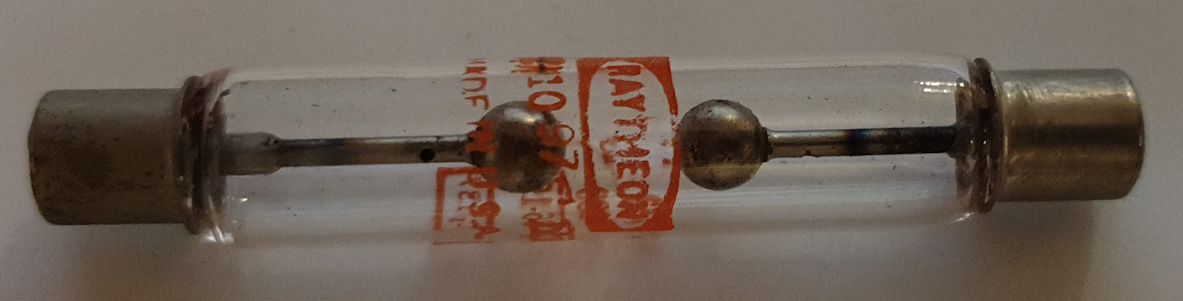
I have found a relatively inexpensive source for a Cs137 check source. It is in the form of a 'new old stock' Raytheon CK1097-15 spark gap from ebay.co.uk. (No longer listed - You may find one by searching.)
It isn't very active though. I bought it to use as a calibration source for my gamma spectrometer project I'm on with. I tested using a LND712 tube and got about 55 CPM tops (background was ~17 CPM) and had to place the spark gap right up to the end window of the LND712. Whilst not very active it should work well for calibration purposes. It's hard to photo the printing on the spark gap
-
-
As the title suggests. A video by DextersTechLab on YouTube. This is well worth a watch if you are interested in scintillation. Archived from radmon.org - originally posted 18/08/2019
-
In reply to a nzoomed's question on radmon.org: Im wanting to build an outdoor monitoring station with an SBM20 and not sure if its good to use a PVC pipe to place the tube inside? Obviously im wanting something as thin as possible to let as many particles through as possible. Are there some materials I should avoid? Are beta particles typically encountered much in the environment? Should I only be worried about cosmic rays? Im not sure how much background radiation is from other sources, but im expecting there is a great deal from alpha decay from the likes of radon etc which will never be
-
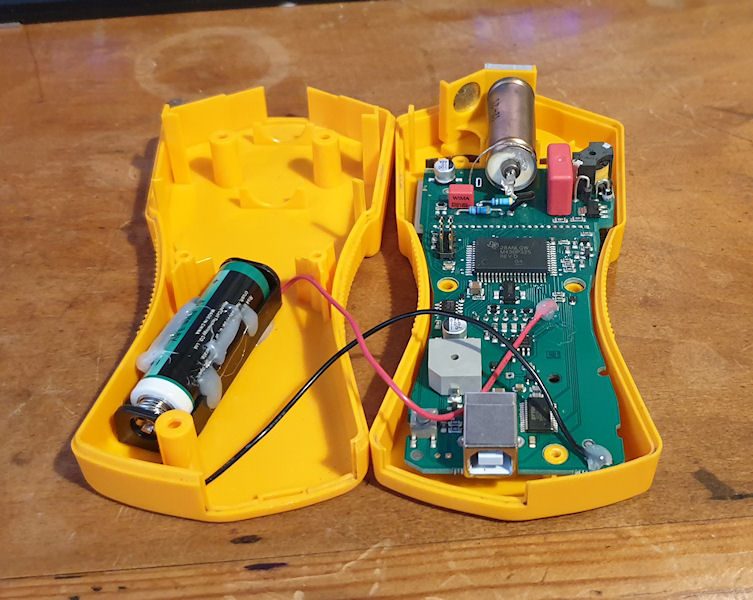
Curiosity got the better of me so I decided to open up the Gamma Scout. I managed to carefully remove the sticker enough to reveal the screws so here are some pictures of the inside of the counter. The pictures aren't great as I'm not really setup with good lighting etc. A quick update after living with my Gamma Scout for a few months. Despite everything I have written (which my opinion remains true and I stand by) I have really grown to love this counter. It's very handy and just 'there' when I need/want a counter. It is the first counter I pick up now for whatever I want to check. Prior to
-
As the title suggests, I bought a Gamma Scout. I was, let's say, underwhelmed with it so decided to give my thoughts on it. I'll not cover everything here so if you are interested then it would be advantageous for you to read up on the Gamma Scout Alert on their website prior to reading my thoughts. I had been wanting a Gamma Scout for a couple of years to add to my collection. I'd seen them on the web, in Youtube videos. In places like Fukushima and Chernobyl/Pripyat etc. and from what I had seen I assumed, I think it's fair to say, I'd assumed it better than it actually is. I bought mine
-
A very strange one here. I'm looking for answers but after scouring the internet I doubt I'll find any. My SBT-10A tube has been destroyed for some reason unbeknown to myself. The mica window has completely shattered. I have no idea why. In the pictures you can see the damage. It appears that the mica has either reacted with something or it has catastrophically degraded. The last time I used this was on 20/10/2018 (so less than a month ago) when I decided to setup a reasonably controlled comparison of all my sources (I'll post about that in the future). It was working perfectly then and got
-
I've been working on an air quality monitor over the weekend. I have a working model that samples and logs every 5 minutes into various .csv files that are used for drawing graphs. It is a work in progress, still much to do. Take a look here: https://www.blinkyslab.co.uk/airquality/ Please ignore the data as it is not accurate as is just for testing purposes at the moment. I'll be dumping the collected data and starting from scratch when I get this into an enclosure and mounted properly outside. (All data shown on the page is good.) The hardware is very simple. An ESP8266 (Wemos D1 Mini), I2C
-
Blackpool UK - 19 July 2017 - Started around 17:00 BST / 16:00 UTC During quite a downpour today, 20mm in one hour. At it's peak was 65mm/h. Background radiation increased by approx 50% / 11CPM over a 2.5hour period. Not much by any means but still an indication there was some radioactive substance in the rain. Please note the Radmon graphs are UTC and the rain graphs are BST (UTC + 1) and so there is an hour difference between them. What caused it? I could be anyone's guess. Radon causing decay products to get caught up in the rain? Radioactive cloud blowing over from somewhere? Radioactive
-
A radmon.org user was having avalanche issues with their SBT-10 Geiger Muller tube. Doing a little research I found a little information stating that each anode on the GM tube (there is ten in total) should have it's own quenching resistor. I have mine set with a 10Mohm on each anode (see pic below) and appears to work OK, although I haven't had it running for long and just some simple tests. When I got it I scoured the web looking for info but it seems there is very little. One recurring theme was that the voltage and resistor(s) did play a very big part on getting correct counts from the
-
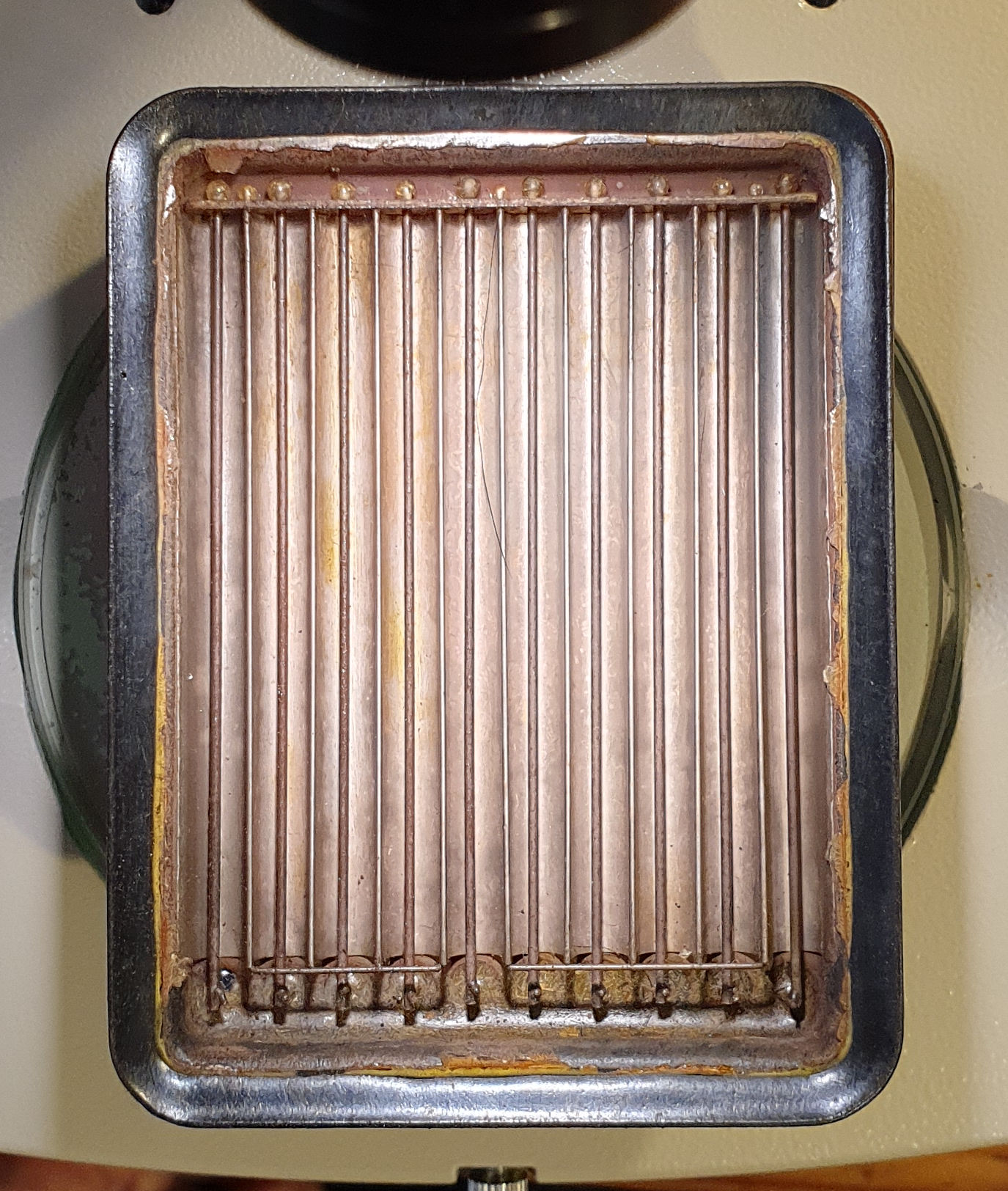
A radmon.org user posted a question asking what the black spots were in his SBT-10. I had recently bought one of these from a seller in Ukraine and mine too has the black spots similar to the one posted on radmon.org. The seller assured me that mine was NOS (new-old-stock), meaning whilst it is old, it has merely been stored for the time and never used. It appears to be working correctly regardless of it's condition. I tested each element separately and each reads around the same CPM as the others so I'm assuming that whilst cosmetically nasty, the black spots appear to do no harm. What