Blinky's Lab

Mr Blinky

Nuts about radioactive everything!

  • Posted on
    Featured Image
    Before the Thyristor, was the Thyratron!
    I was repairing an old Russian DP-5V counter yesterday and noticed an unusual neon/orange flashing glow coming from the probe PCB that I have never seen before, so decided to investigate. It is caused by two thyratrons on the board, flashing away with the clicks of the counter. They are similar to modern thyristors in their function. These thyratrons are filled with neon gas, hence their orange glow. This is from wikipedia: https://en.wikipedia.org/wiki/Thyratron Conductivity of a thyratron remains low as long as the control grid is negative relative to the cathode because the grid repels
  • Posted on
    Featured Image
    Panax TM64 B Geiger Counter (Circa 1960) Pt.2
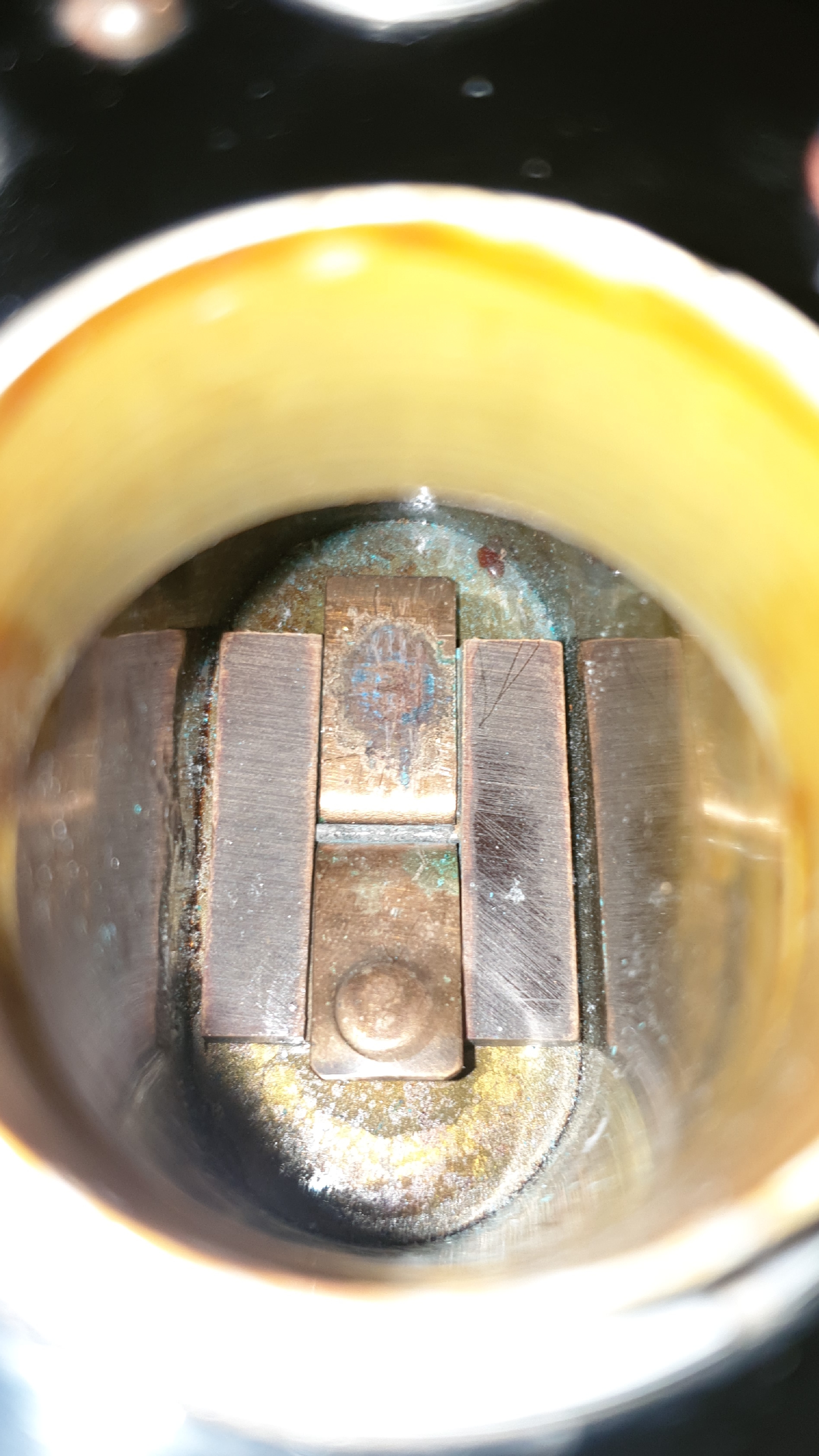
    Following on from Pt.1 - Here are some pictures of the battery compartment. You can see the terminals at the bottom pivot in the middle like a seesaw, also with one battery inserted and then with two. I couldn't resist and took out the tube to have a look at it. It is rather large, pictured below next to a STS-5 tube (SBM-20 equivalent.) ↑ Seesaw battery terminals with pivot at the center. ↑ ↑ One battery inserted. ↑ ↑ Two batteries inserted. The cap has a large shaft that pushes down on the positive terminal, the battery is pressed down making the seesaw terminal push the other battery up.
  • Posted on
    Featured Image
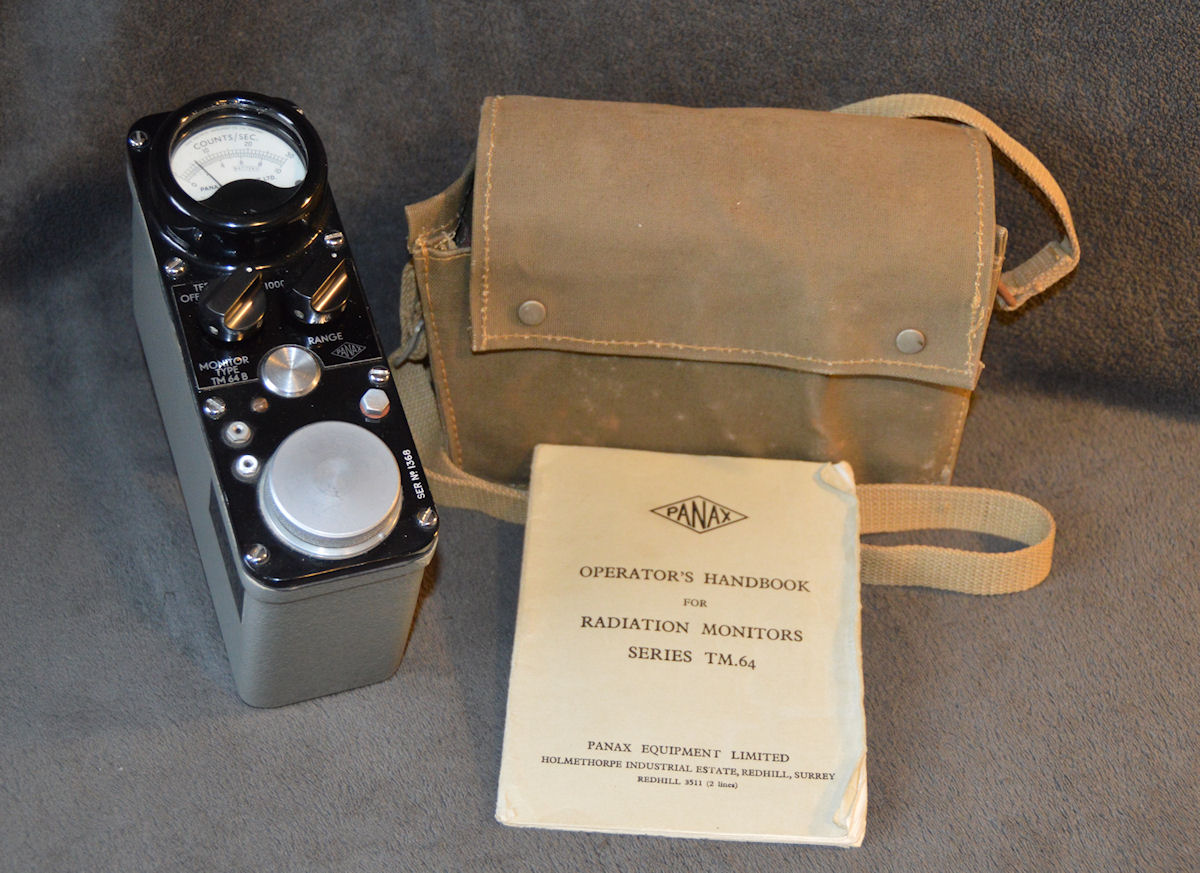
    Panax TM64 B Geiger Counter (Circa 1960) Pt.1
    This is one of my latest Geiger counters and it is in fantastic condition. To say this is probably more than 60 years old, it has really faired well. It wasn't working when I got it as one of the battery terminals had some corrosion to it. After a quick but very awkward clean up of the terminal it came to life. What really attracted me to this, besides it's condition, is the fact the meter is in CPS (counts per second.) I thought it unusual for a small counter of this era to be in CPS. Being CPS would mean it would be sensitive, which it is, fairly so. The unit is complete as far as I can
  • Posted on
    Featured Image
    I have translated the manual with the help of a couple of internet AI translators. Attached below you will find a couple of PDFs of the original Russian manual and an English translation of the manual, also the text of the manual in .txt format. The PDFs quality isn't great as the images weren't great but they work. The text version is probably easier to read. A couple of things about operation that I was puzzled about were the mains/missing psu and missing battery. From reading the manual I'm assuming that this was in fact a "Lux" flashlight (battery/rechargeable) and that this company made
  • Posted on
    Featured Image
    A Very Strange Geiger Counter from Russia - The BIR-3 Pt.2
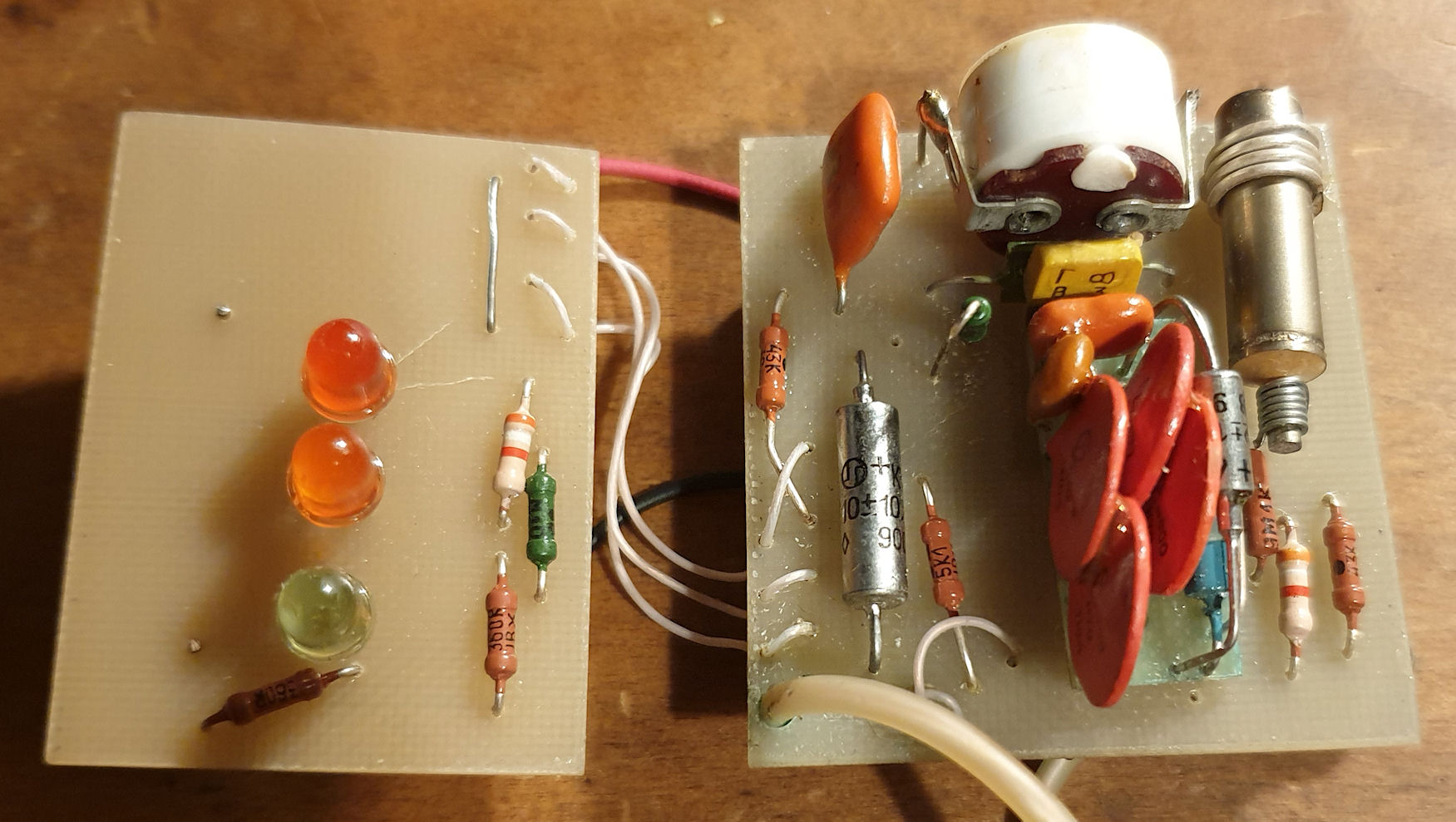
    I have managed to power this up and it does work! 😊 I have also started reverse engineering it a little. I removed the two (brass?) strips and replaced them with wires so I can flatten the board out properly. The two strips were connecting the ground and VCC on the boards together. I haven't yet translated the manual, but I will in due time as I can't find a single thing about this counter on the internet at all and the info may be of use to others' too. In all it seems like a very basic counter with a quirky display. If I knew what the ICs actually were I could maybe replicate this on a
  • Posted on
    Featured Image
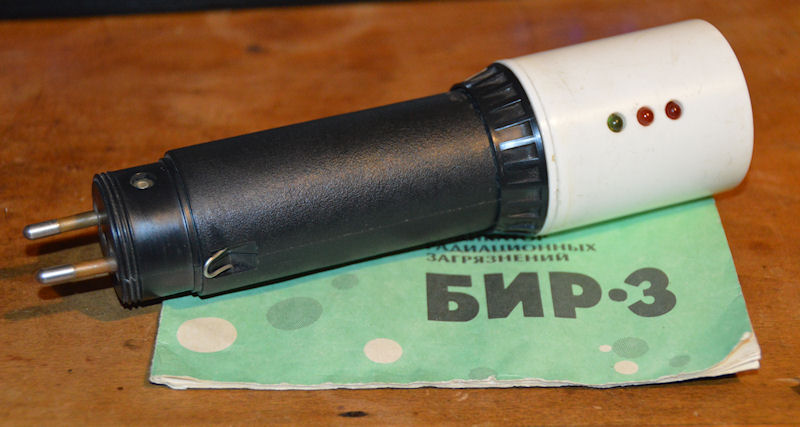
    A Very Strange Geiger Counter from Russia - The BIR-3 Pt.1
    I found this on ebay priced at £12.52 delivered and couldn't resist at that price so I bought one for shits and giggles! Probably the most bizarre counter I have bought yet. (Apologies for the camera focus - new camera, very complicated... 😯 ) I haven't powered it on yet as I have no idea what battery it should be, if it should be a battery at all. It has US mains plug pins on one end but there is nothing wired to it, nor is there a battery cover. The only way to put a battery in is to disassemble the unit, which is rather cumbersome. It looks to be a flashlight made into a counter, but comes
  • Posted on
    Featured Image
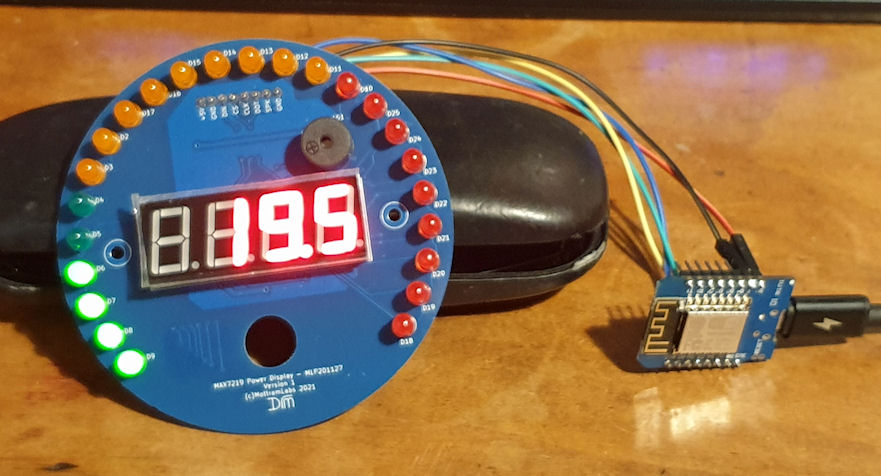
    Wifi LED CPM Display for Displaying Radmon.org Station Count
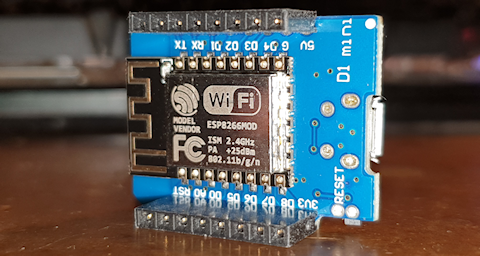
    [Updated: 22/12/2021] Its the first day of holidays and I'm bored already.... So I cooked up a neat wifi/wemos d1 mini/arduino/LED display for displaying a station's current CPM. It works by simply connecting to one's Wi-Fi and then goes to the URL, pulls the data, strips the first space and everything afterwards then converts what is left to a float (the CPM count from the start of the string) and displays it. The bar graph LEDs are mapped from 0 to 100 CPM at full scale deflection, but the 7 segment display will display up to 999.9 CPM, and after that will just display - - - - lol. It's
  • Posted on
    Featured Image
    Whilst looking around the internet I found a trove of old declassified CIA documents. Among these were one called 'Chernobyl Nuclear Power Plant Accident CIA, Department of Defense, Department of Energy, Congressional, GAO, and Foreign Press Monitoring Files' that goes into some detail about the accident from the perspective of the authorities. There was originally 4010 pages and sadly this has been shaved down to a mere 224 pages in the released document. An excerpt of this document: THE ACCIDENT According to reports filed with International Atomic Energy Agency (IAEA) on April 25, 1986,
  • Posted on
    Featured Image
    Gamma Scout - Replaceable 10 Year Battery Mod
    Something I really dislike is planned obsolescence, and closely 2nd to that, where things are not user serviceable and have to be returned to the manufacturer for minor things such as battery replacement. I'm a large advocate of 'right to repair'. The battery in the Gamma Scout is a 10 year, 3.6v Lithium battery soldered directly onto the board. Gamma Scout (at last check some time ago) wanted 40 Euro plus shipping one way to Germany to replace the battery. Pfft! The original battery is about £20 all in for a replacement, but I decided to go another route and modify the Gamma Scout to take a
  • Posted on
    Featured Image
    Another destroyed SBT-10A. Lets see what's inside!
    Well, I managed to destroy my second SBT-10A. The first destroyed itself as far as I am concerned as I took it out of it's box one day, and it was toast - post here . This one was my fault. I dropped a polarizing filter on the mica window (only from about 4cm) but it hit it and went with a proper loud bang, right in my face and showered my microscope and desk with bits of mica, then the black bits on the inside of the mica just turned to a yellow schmoo in the air atmosphere. It would have been a nice experiment had I actually planned it, but I did manage to get some video of the black