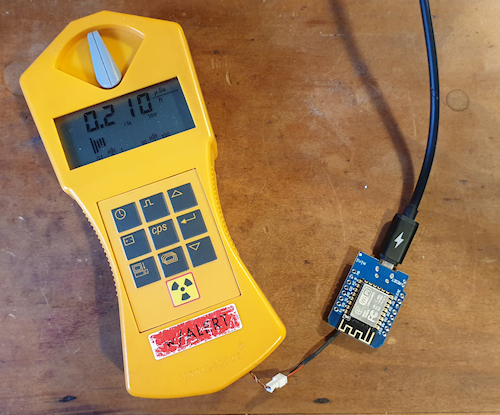
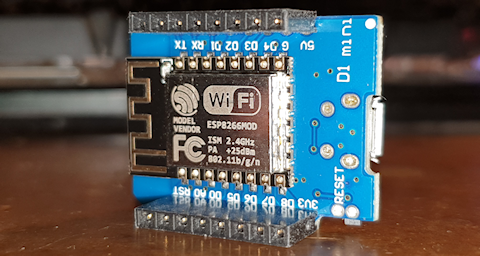
Archived from radmon.org - originally posted 28/01/2023 A member (of radmon.org) asked me if the Gamma Scout would/could work with radmon.org using the USB and software the counter came with. The answer to that is a simple, no, but it could be down with a quick hack. Simply add a couple of wires and connect them straight to an ESP8266 or similar MCU. This guide only covers the 'Alert' model. There may be differences with other Gamma Scout models. Here is how: Open up the Gamma Scout and locate the small transistor at the top left of the board, right above the pin header. There we are going to
-
-
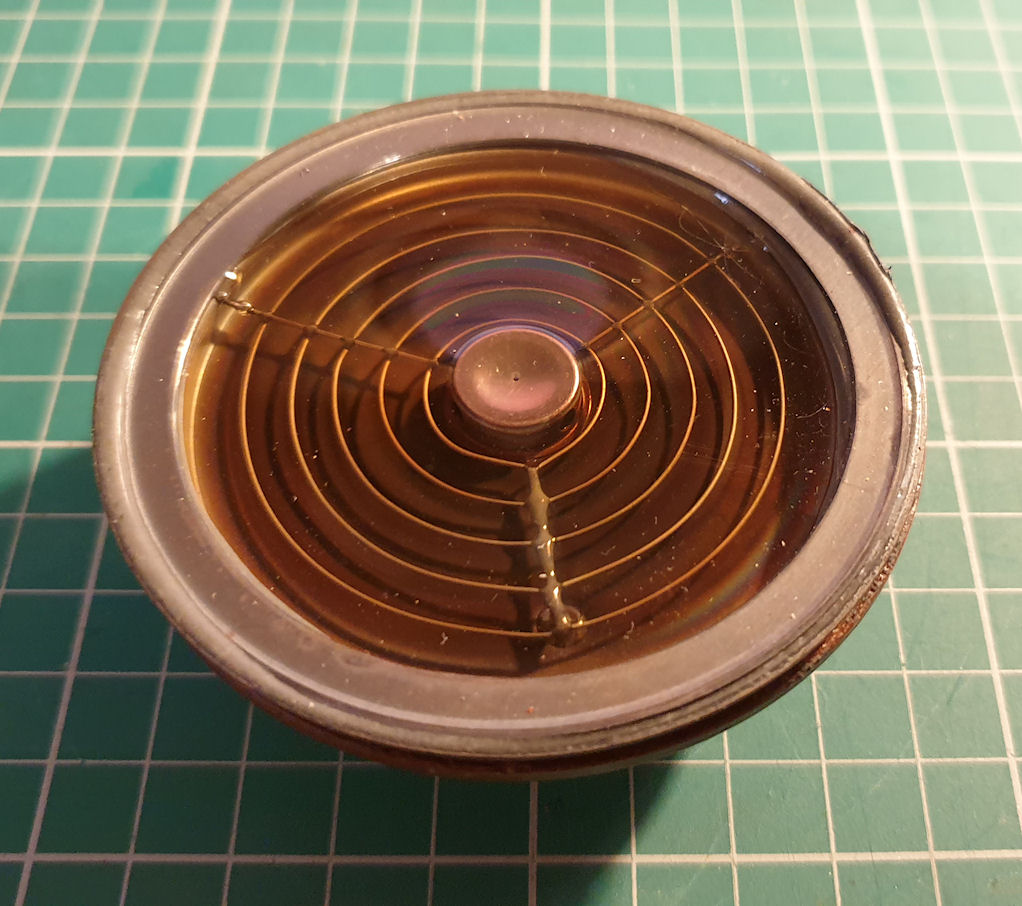
Archived from radmon.org - originally posted 23/12/2022 Here are some pictures and details about the SI-8b (СИ8Б) Pancake Geiger Muller tube. The adhesive failed between the tube and the Bakelite rear case on my tube, so it would be rude not to take it apart for a look! From what I understand this tube is designed for soft beta detection, but is also capable of alpha, hard beta and gamma, although calibration would center on soft beta particles. I did however read this from a website: 'This Geiger-Mueller tube is only sensitive to β and γ radiation. The calibration is only correct for the γ
-
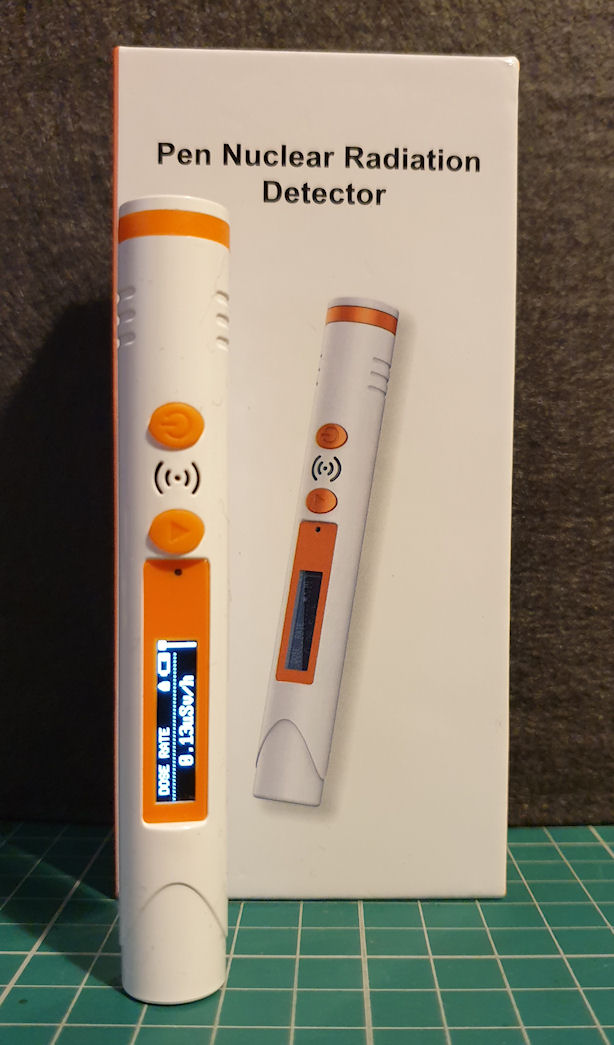
Archived from radmon.org - originally posted 11/12/2022 I have seen these kicking around the usual suspects (Ebay, Amazon, Aliexpress etc.) for a little while now and after watching (a not very informative YouTube video) I decided to get one and see just what it is and is it any good. TLDR; You get what you pay for. I paid about £32 for this from Aliexpress.com but have seen them for as little as £25 on Aliexpress.com and as high as £60 on Ebay and Amazon. The unit is very small and packs a tiny 150mAh LiPo cell, 48mm x 7mm (external dimensions) HH614 GM Tube, tiny OLED screen, a massive
-
Archived from radmon.org - originally posted 20/02/2022 ** Note: This is for submission of CPM readings to radmon.org. Here is some Arduino code for the ESP8266 written and tested on a Wemos D1 Mini. This is bare-bones code only. It does only these things: receives pulses on GPIO 13 (physical pin D7 on Wemos D1 Mini), calculates CPM and submits it to Radmon.org (via WiFi) every 60 seconds. It has a little debugging that can print to serial, flashes the internal LED when an interrupt event is detected and I have also added CPM print to serial (much like the NetIO GC-10) that can be used with
-
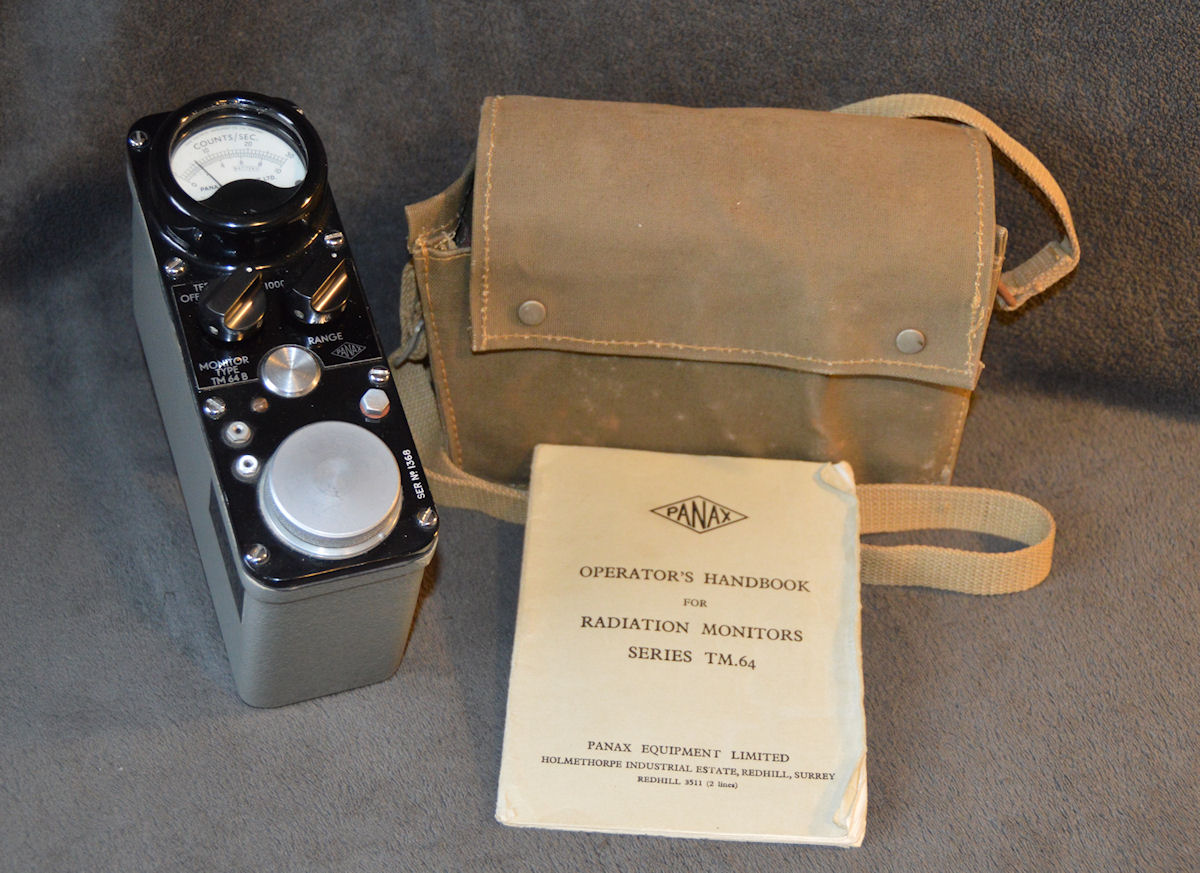
Archived from radmon.org - originally posted 13/02/2022 This is one of my latest Geiger counters and it is in fantastic condition. To say this is probably more than 60 years old, it has really faired well. It wasn't working when I got it as one of the battery terminals had some corrosion to it. After a quick but very awkward clean up of the terminal it came to life. What really attracted me to this, besides it's condition, is the fact the meter is in CPS (counts per second.) I thought it unusual for a small counter of this era to be in CPS. Being CPS would mean it would be sensitive, which it
-
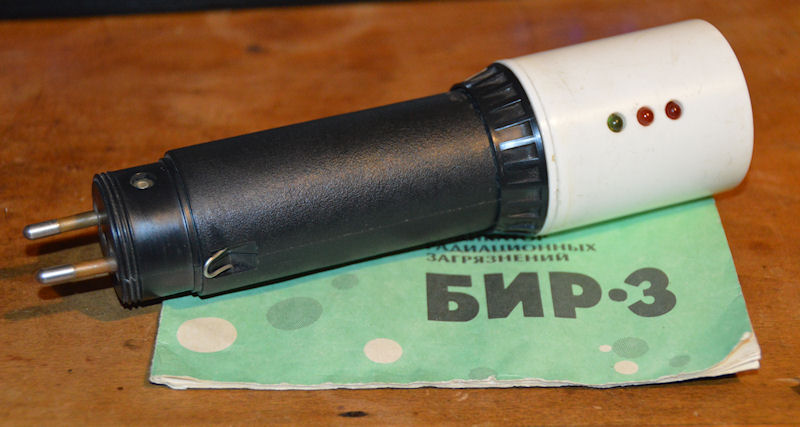
Archived from radmon.org - originally posted 01/02/2022 I found this on ebay priced at £12.52 delivered and couldn't resist at that price so I bought one for shits and giggles! Probably the most bizarre counter I have bought yet. (Apologies for the camera focus - new camera, very complicated... 😯 ) I haven't powered it on yet as I have no idea what battery it should be, if it should be a battery at all. It has US mains plug pins on one end but there is nothing wired to it, nor is there a battery cover. The only way to put a battery in is to disassemble the unit, which is rather cumbersome. It
-
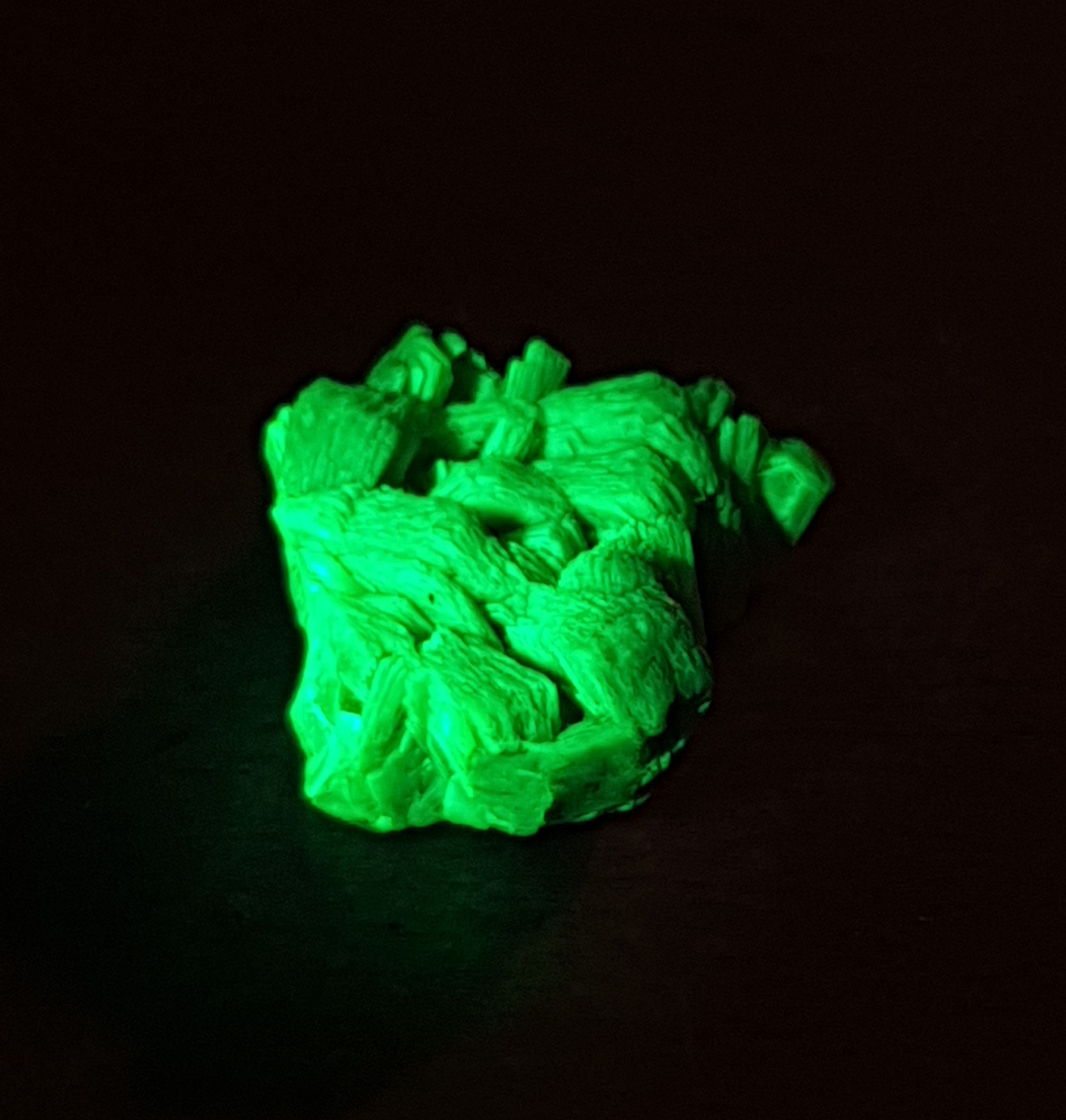
Archived from radmon.org - originally posted 06/09/2019 I have just received my latest specimen, Autunite. It is quite fantastic! It is tiny, quite spicy and fluoresces like I have never seen before. The pictures don't do it justice as the colour is strikingly vibrant and has more of a yellow than green fluorescence. I struggled taking photos of it due to the amount of light it produces when it fluoresces. Like trying to take pictures of a light bulb! I took a few pictures with differing light levels. A selection are below. 22,000 CPM on a SBM-20 is quite spicy! Very happy with it. "Autunite
-
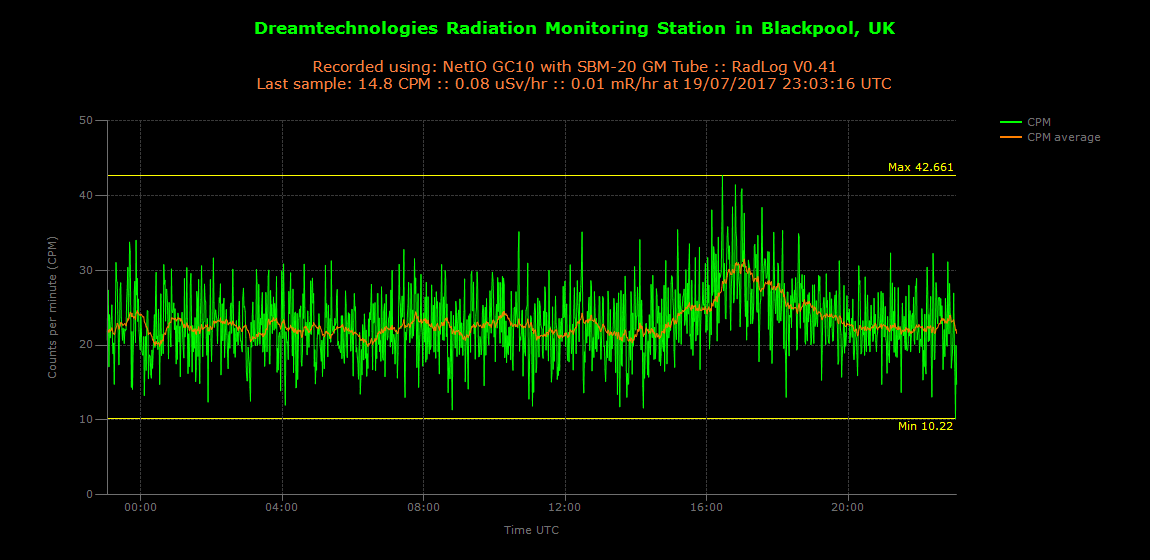
Archived from radmon.org - originally posted 19/07/2017 Blackpool UK - 19 July 2017 - Started around 17:00 BST / 16:00 UTC During quite a downpour today, 20mm in one hour. At it's peak was 65mm/h. Background radiation increased by approx 50% / 11CPM over a 2.5hour period. Not much by any means but still an indication there was some radioactive substance in the rain. Please note the Radmon graphs are UTC and the rain graphs are BST (UTC + 1) and so there is an hour difference between them. What caused it? I could be anyone's guess. Radon causing decay products to get caught up in the rain?
-
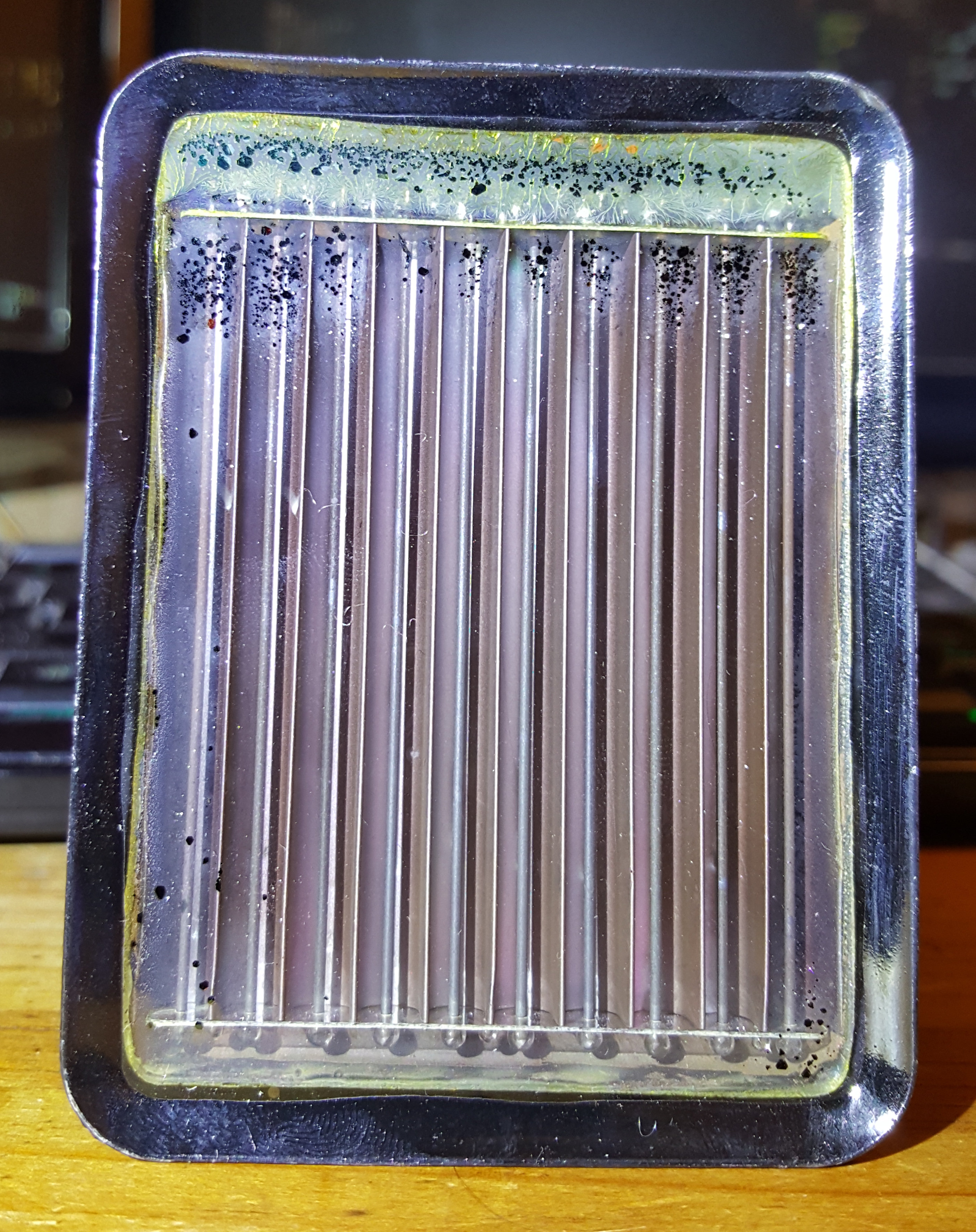
Archived from radmon.org - originally posted 19/03/2017 A radmon.org user posted a question asking what the black spots were in his SBT-10. I had recently bought one of these from a seller in Ukraine and mine too has the black spots similar to the one posted on radmon.org. The seller assured me that mine was NOS (new-old-stock), meaning whilst it is old, it has merely been stored for the time and never used. It appears to be working correctly regardless of it's condition. I tested each element separately and each reads around the same CPM as the others so I'm assuming that whilst cosmetically
-
Hello World! This is I, Mr Blinky. Welcome to my lab! Here I will write about Geiger counter and radiation related things, experiments, projects and general musings. Please note that the image above is actually NOT me...