
- Posted on
- • Geiger Counters
Panax TM64 B Geiger Counter (Circa 1960) Pt.1
- Author
-
-

- User
- Mr Blinky
- Posts by this author
- Posts by this author
-
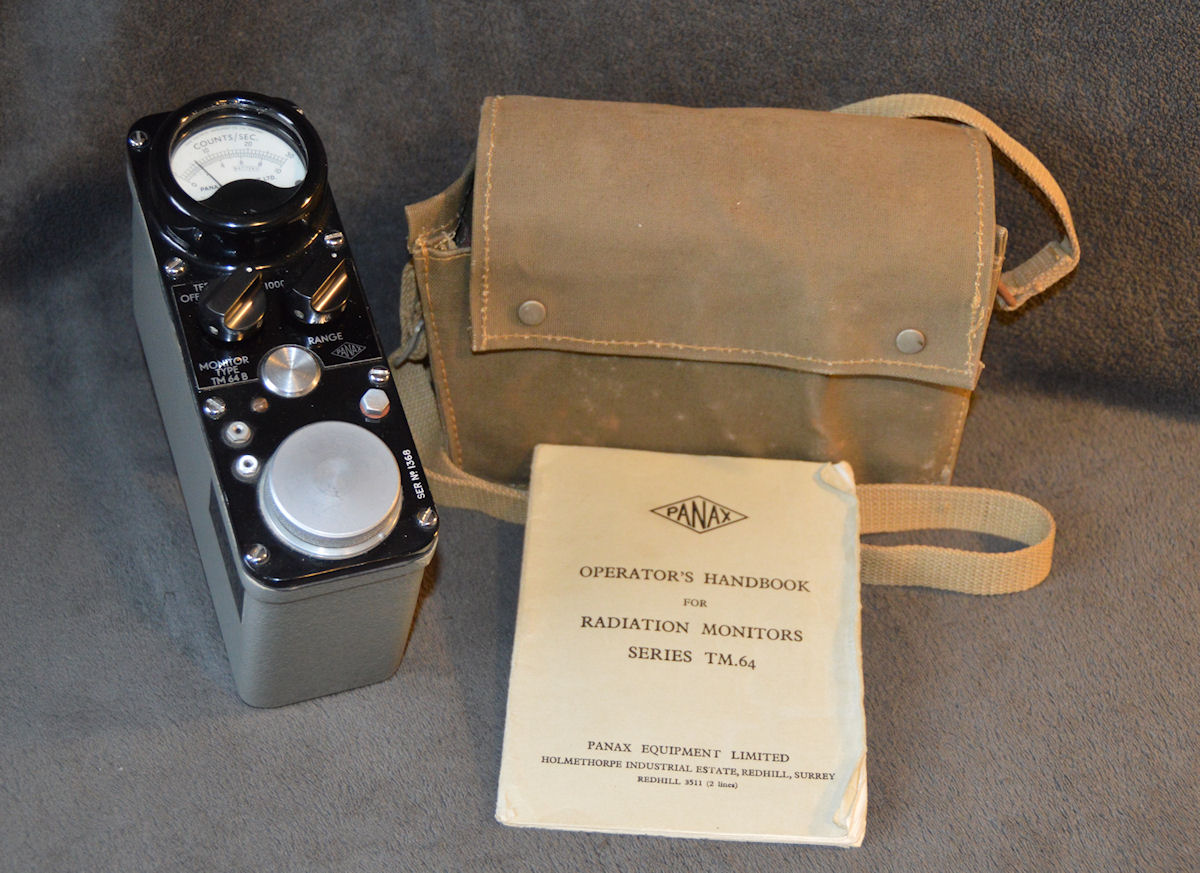
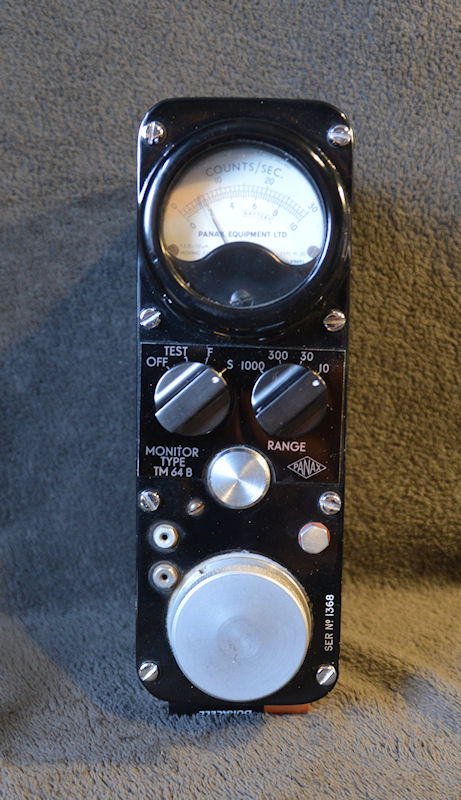
This is one of my latest Geiger counters and it is in fantastic condition. To say this is probably more than 60 years old, it has really faired well. It wasn't working when I got it as one of the battery terminals had some corrosion to it. After a quick but very awkward clean up of the terminal it came to life. What really attracted me to this, besides it's condition, is the fact the meter is in CPS (counts per second.) I thought it unusual for a small counter of this era to be in CPS. Being CPS would mean it would be sensitive, which it is, fairly so. The unit is complete as far as I can tell. There is next to nothing on the internet for this counter, also others from the same time. Just a scattering of images from auction sites is mainly it. As there is no info I have decided to make some info available for this counter, and looking forward I think I may do this with my entire collection. It would be nice to catalogue them all with good images and as much documentation as possible. I scanned the manual and tube datasheet and have attached them below. If anyone is interested in the hi-res images then let me know and I will upload them somewhere. I have only put low rez images here as I don't want to consume too much space. Anyway, here is the Panax TM64 B.
My thoughts:
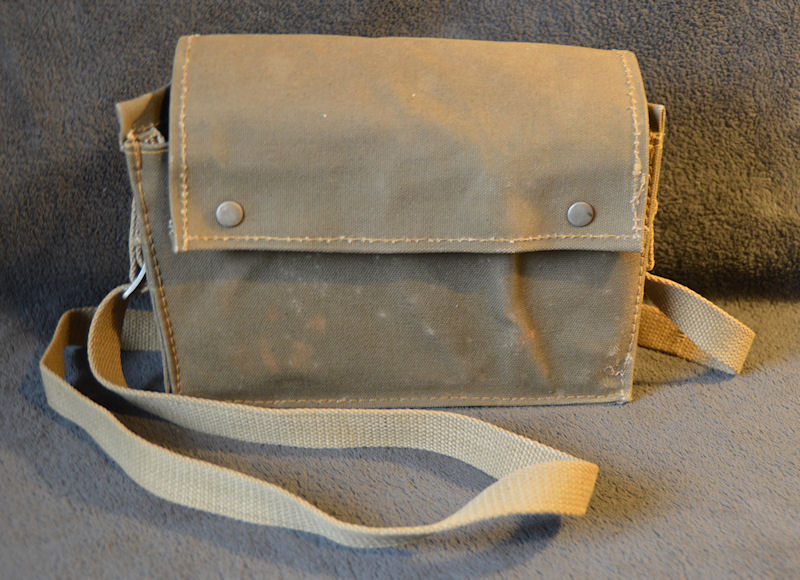
I really like this counter. Not only is it in mint condition, (just needs a good dust and polish) it works really well. It has a very nice range from 0-10 cps to 1000 cps making it quite usable even by today's standards. The tube is a glass walled γ-sensitive Mullard ZP1210 (MX120/01). Interestingly the tube datasheet that came with the counter is dated 1980. This counter is most definitely from the 60's so I can't understand why a 1980 datasheet. There are only two conclusions I can surmise; 1, the tube has been replaced for one reason or another, or 2, someone has simply added the datasheet with the counter at some point in the past, maybe another collector. When I took it apart for the first time it was like it had never been opened. The screws all had a proper crack to them and the gasket was stuck nicely as I had to tap it around the seam to break it apart. But on the other hand the red tape covering the end of the tube doesn't look too old although there are no marks from previous bits of tape. It just seems unusual for the datasheet to be 20 years younger. The circuit is in literally two halves, one for the HV power supply and the other for the counter. It came with a small haversack that is only large enough for the counter and it's manual and it all fits quite well.
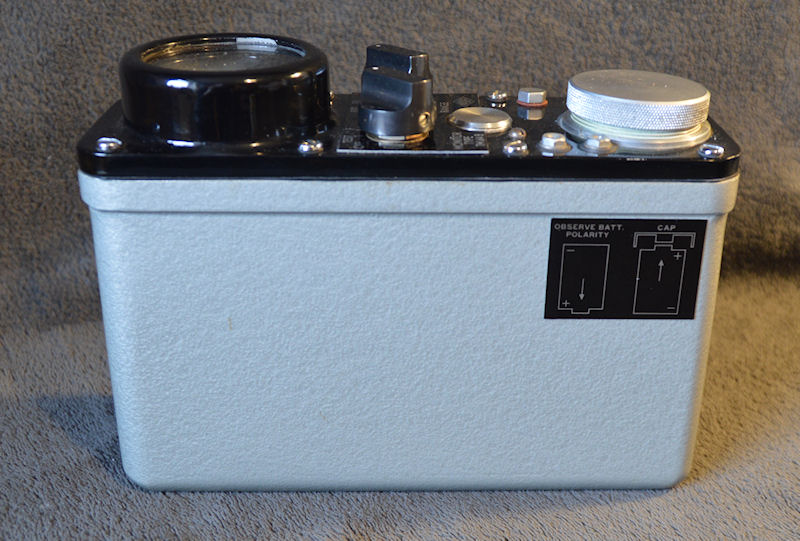
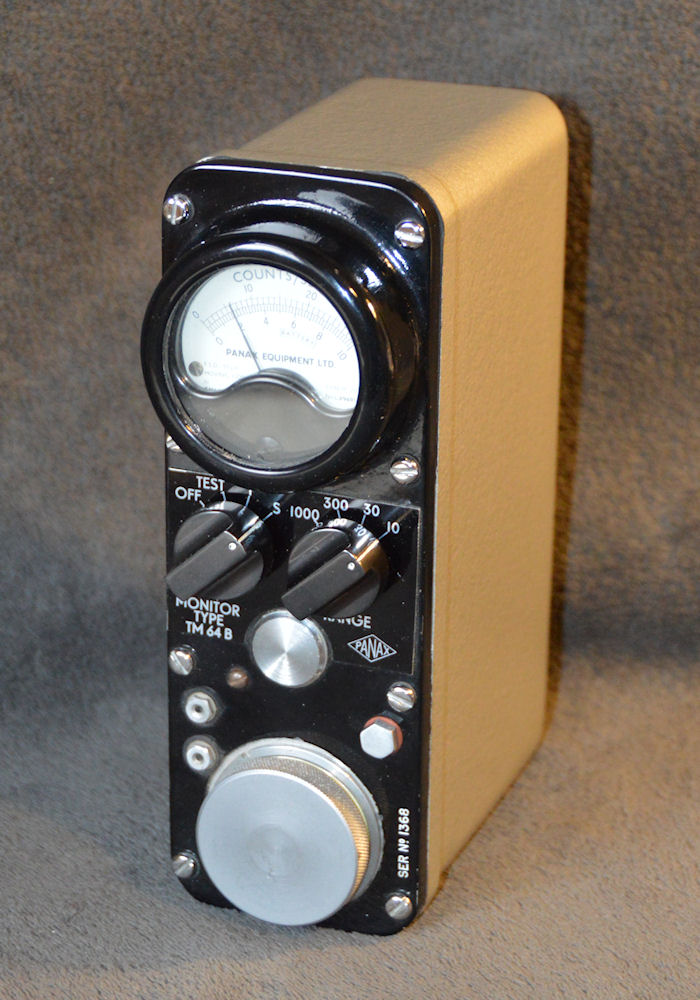
This isn't light weighing in at 1718 grams (1.7kg) with batteries but no accessories, but it is compact at 185mm long, 63mm wide and 130mm deep. It feels solid and strong with thick walls and chunky construction. The meter is nice and super smooth on both fast and slow settings. It has a nice scale and even has the model number printed on the meter face. It doesn't have any feature for lighting up the display in the dark, not is there any 'glow in the dark' parts, which would make this difficult to use in the dark. The turn switches and solid with a proper detent for each setting and both have absolutely no wobble whatsoever. Everything about this feels quality. Whilst small, it is packed in, chunky and weighty. I think if this had a fight with a CDV-700, the CDV-700 would loose. It is probably more sensitive than the CDV-700 due to it's larger GM tube. The headphone socket works and clicks with all radioactive goodness. The battery compartment is quite unusual in this counter and I have never seen this principle ever. To insert the batteries simply unscrew the large cover, drop the first battery in and slide it over away from the opening, then insert the second battery. The lower battery terminals is one piece of metal that acts as a seesaw so when the battery cover is screwed back on it presses one battery down and the lower terminal acts as a lever to push the other battery up to contact the terminal. Quite ingenious as it allows a small opening for having the batteries side-by-side. And the seesaw terminal still has plenty of stiff springiness left! In all I think this is a great little counter. It is compact, sensitive, really well built and looks to be very well thought out in design. I really like it.
Externals and case:
Insides:
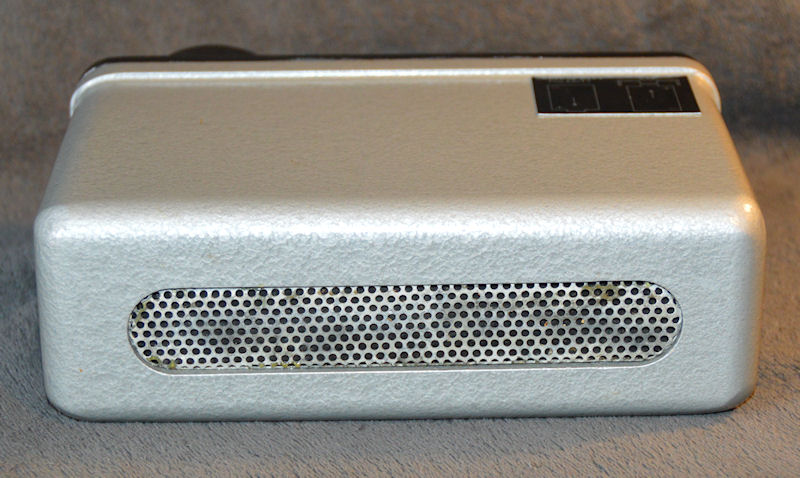
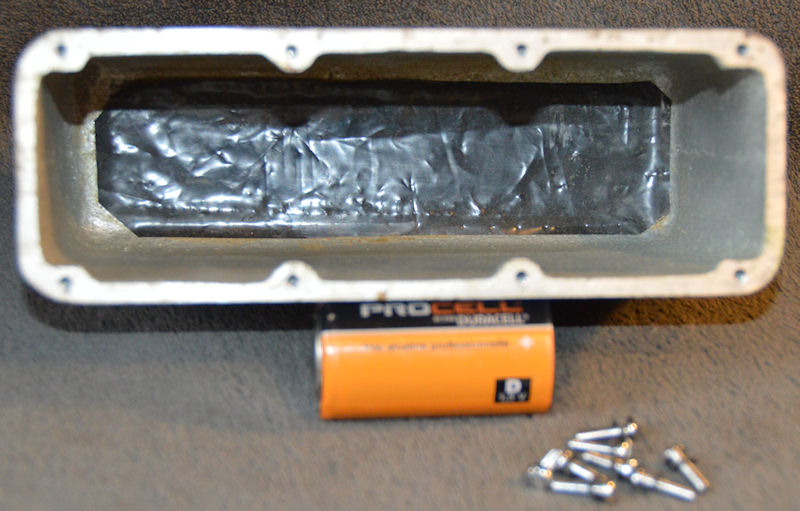 ↑ This is showing what appears to be some kind of plastic or vinyl that is covering the grille. I assume for water protection. ↑
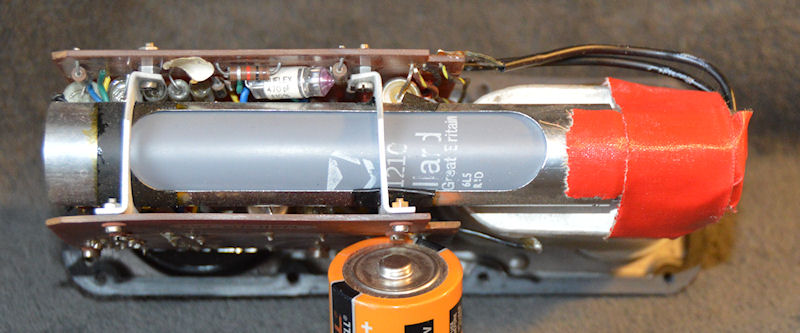 ↑ Here we have the GM tube; Mullard ZP1210, or what looks to be more commonly knows as; MX120/01 (datasheet below.) ↑
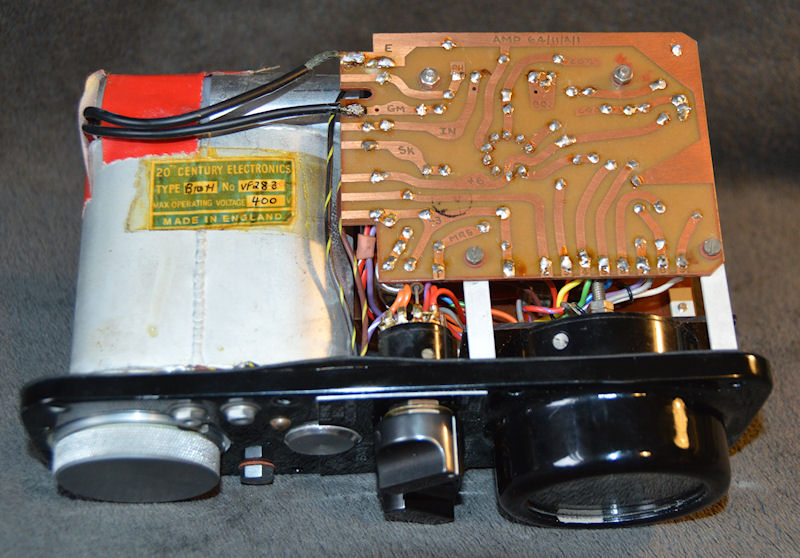 ↑ The 'counter' pcb. ↑
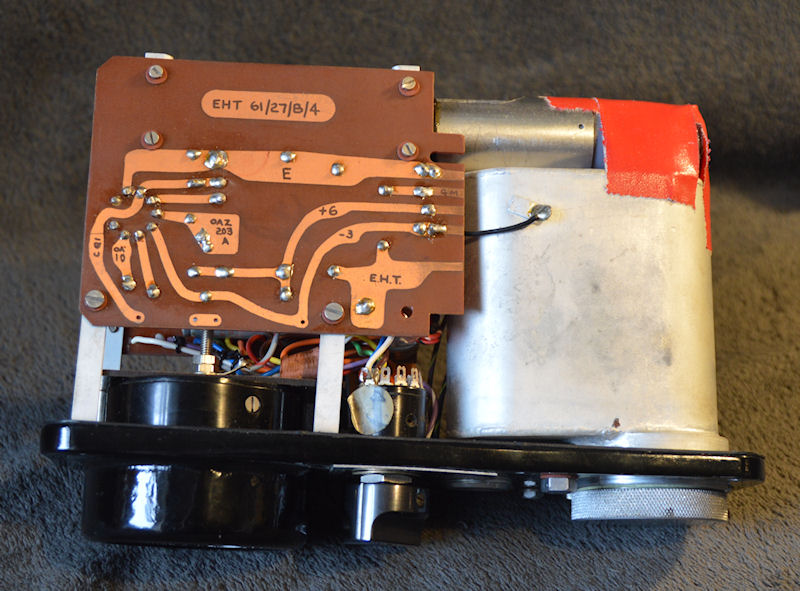 ↑ The HV power supply board. ↑
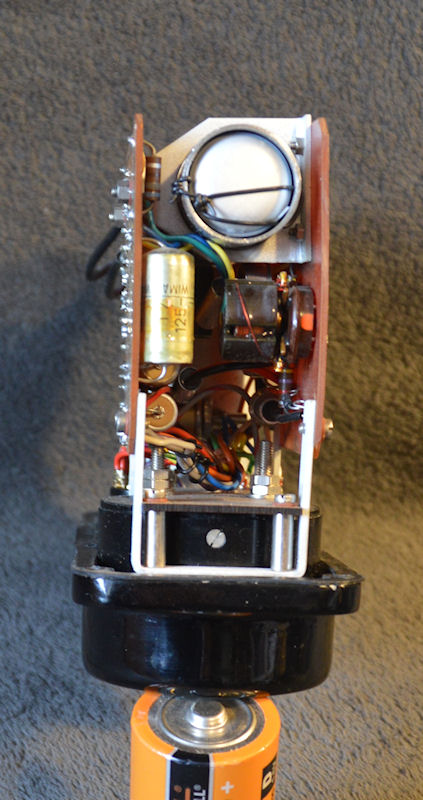 ↑ The top end (where the meter is.) ↑
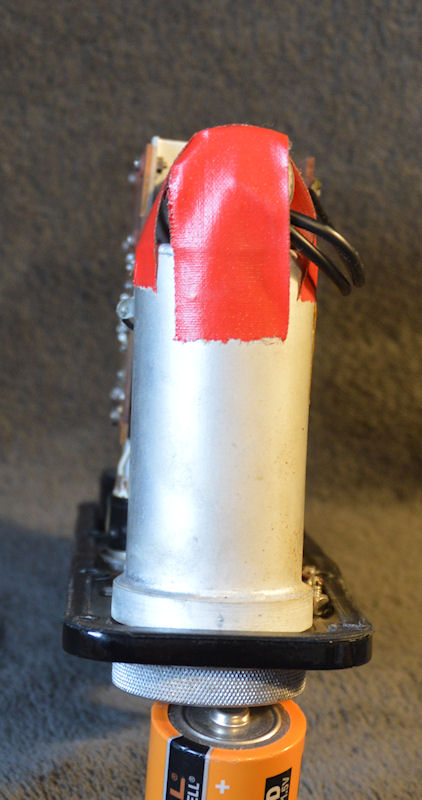 ↑ The bottom end (where the battery compartment is.) ↑
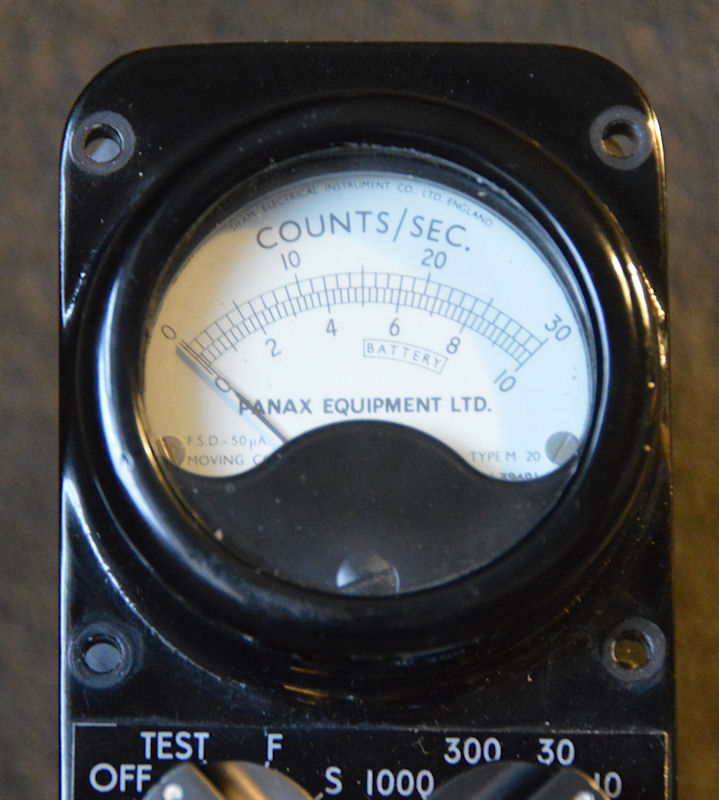 ↑ And here the meter with nice face. ↑
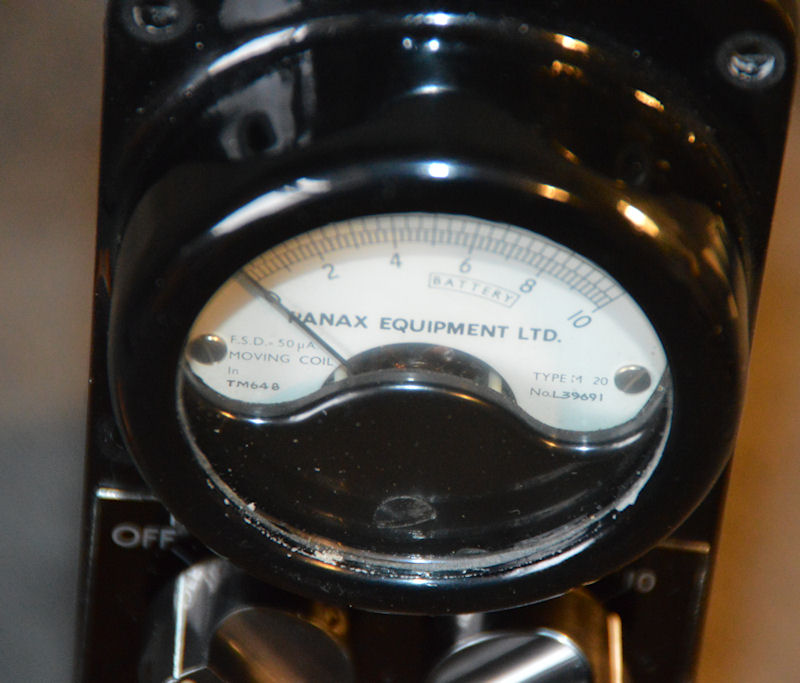 ↑ Another picture of the meter. Here you can see the model number of the counter printed onto the bottom left of the meter face. ↑
Here is the manual and also the datasheet for the Geiger Muller tube:
Panax TM64-B Manual (PDF)
Mullard ZP1210 Geiger Muller Tube (PDF)
Archived from radmon.org - originally posted 13/02/2022
Add Comment
This policy contains information about your privacy. By posting, you are declaring that you understand this policy:
- Your name, rating, website address, town, country, state and comment will be publicly displayed if entered.
- Aside from the data entered into these form fields, other stored data about your comment will include:
- Your IP address (not displayed)
- The time/date of your submission (displayed)
- Your email address will not be shared. It is collected for only two reasons:
- Administrative purposes, should a need to contact you arise.
- To inform you of new comments, should you subscribe to receive notifications.
- A cookie may be set on your computer. This is used to remember your inputs. It will expire by itself.
This policy is subject to change at any time and without notice.
These terms and conditions contain rules about posting comments. By submitting a comment, you agree with these rules:
- Although the administrator will attempt to moderate comments, not all comments can be moderated at all times.
- You acknowledge that all comments express the opinions of the original author and not those of the administrator.
- You will not post material which is knowingly false, obscene, hateful, threatening, harassing or invasive of privacy.
- The administrator has the right to edit, move or remove any comment for any reason and without notice.
Failure to comply with these rules may result in being banned from submitting further comments.
These terms and conditions are subject to change at any time and without notice.
Comments