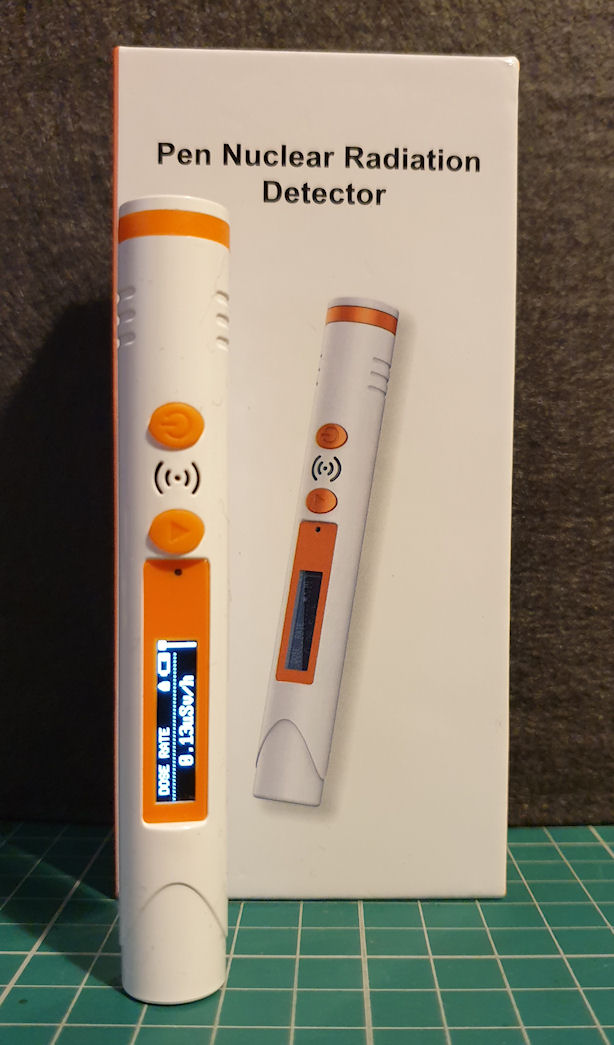
I have been trying to find info on this tube since I got my HFS-P3 Chinesium pen counter, with little to no avail. By chance, a new user to radmon.org (gissio - welcome!) has already found the info and manufacturers website so I have compiled an English version datasheet for this tube (below). Many thanks to gissio for the info! ( https://github.com/Gissio/fs2011pro/tree/main/docs/tubes ) The HH614 is a new tube to the market, released in June 2022. It's quite compact but the size does limit it's sensitivity somewhat. It's gamma sensitivity is 10 CPS/mR/hr compared to the SBM20 at 22
-
-
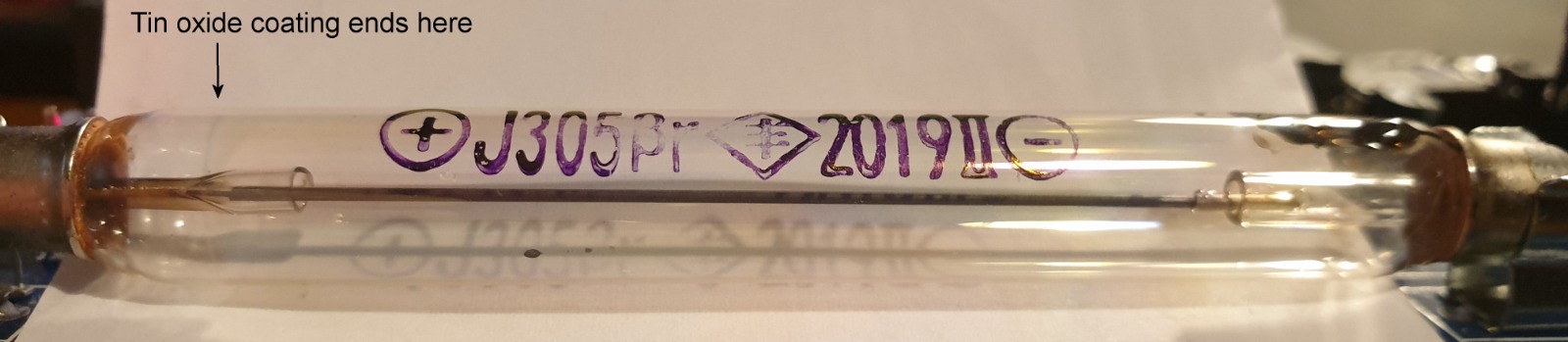
My J305βγ tube is very light sensitive so I made a quick video demonstrating this. I shine daylight (on a miserable cloudy grey day) on the tube at first, then a 365nm UV flashlight and finish off with daylight again. The effects seem to work only at the anode end and not at the cathode end. Doing a little research I found that the light sensitivity of GM tubes only occurs in glass walled tubes that have an external cathode. The specifications show this about the tube wall: Tin oxide Cathode, Coaxial cylindrical thin shell structure (Wall density 50+-10cg/cm2). The cathode is on the exterior
-
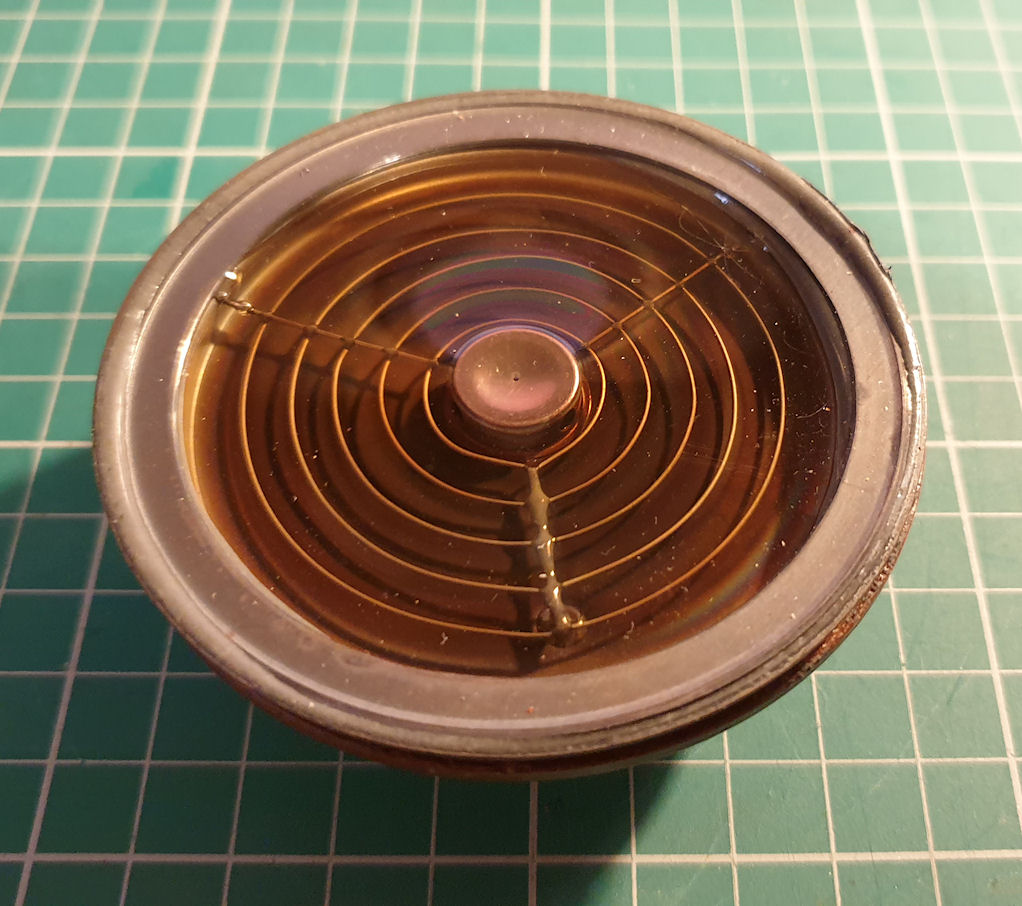
Here are some pictures and details about the SI-8b (СИ8Б) Pancake Geiger Muller tube. The adhesive failed between the tube and the Bakelite rear case on my tube, so it would be rude not to take it apart for a look! From what I understand this tube is designed for soft beta detection, but is also capable of alpha, hard beta and gamma, although calibration would center on soft beta particles. I did however read this from a website: 'This Geiger-Mueller tube is only sensitive to β and γ radiation. The calibration is only correct for the γ radiation (662keV) emitted from Cs-137.' I will test at
-
I have seen these kicking around the usual suspects (Ebay, Amazon, Aliexpress etc.) for a little while now and after watching (a not very informative YouTube video) I decided to get one and see just what it is and is it any good. TLDR; You get what you pay for. I paid about £32 for this from Aliexpress.com but have seen them for as little as £25 on Aliexpress.com and as high as £60 on Ebay and Amazon. The unit is very small and packs a tiny 150mAh LiPo cell, 48mm x 7mm (external dimensions) HH614 GM Tube, tiny OLED screen, a massive overkill ARM Cortex-M0 FM33LC043N MCU from Fudan Micro and
-
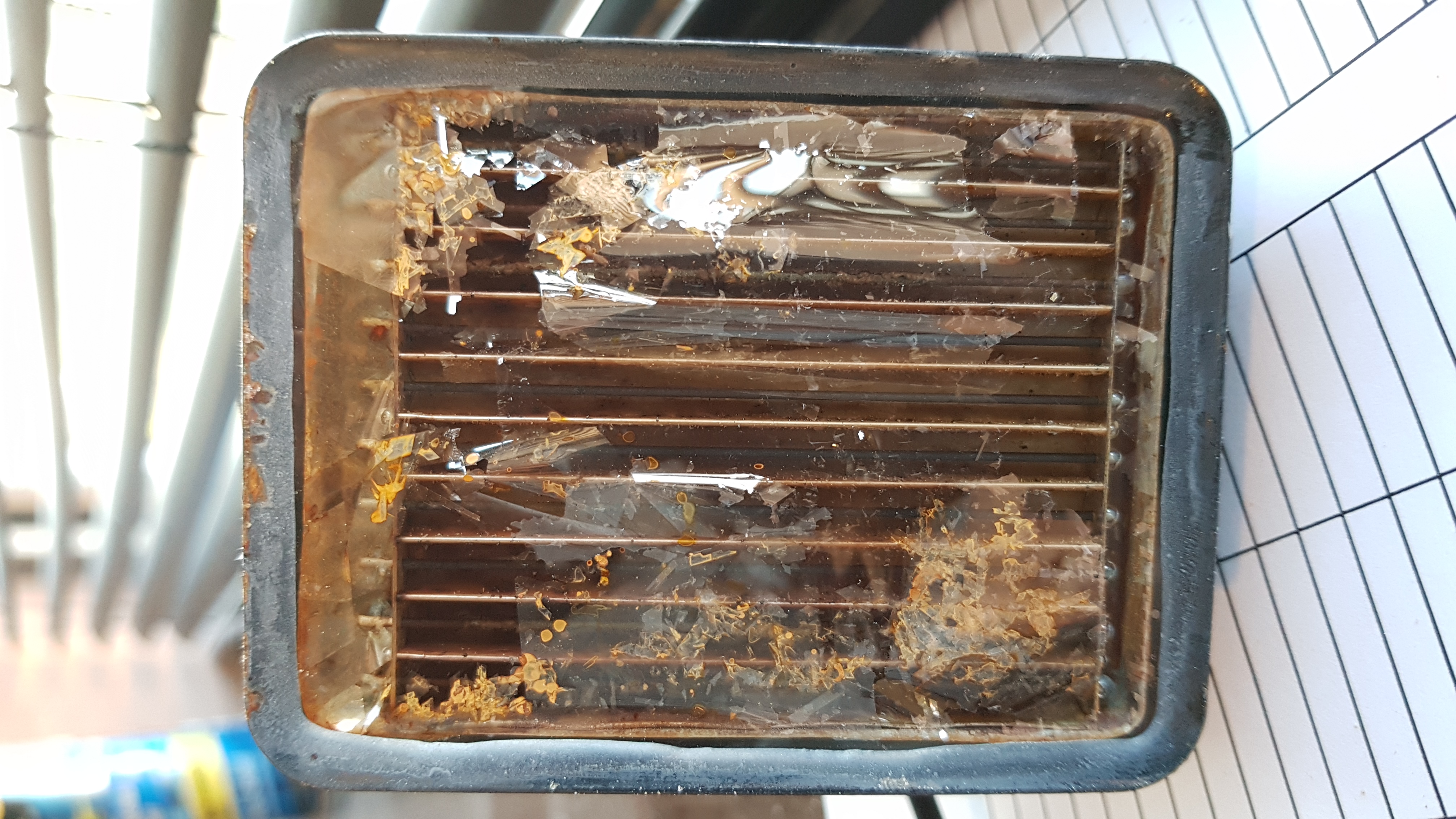
Well, I managed to destroy my second SBT-10A. The first destroyed itself as far as I am concerned as I took it out of it's box one day, and it was toast - post here . This one was my fault. I dropped a polarizing filter on the mica window (only from about 4cm) but it hit it and went with a proper loud bang, right in my face and showered my microscope and desk with bits of mica, then the black bits on the inside of the mica just turned to a yellow schmoo in the air atmosphere. It would have been a nice experiment had I actually planned it, but I did manage to get some video of the black
-
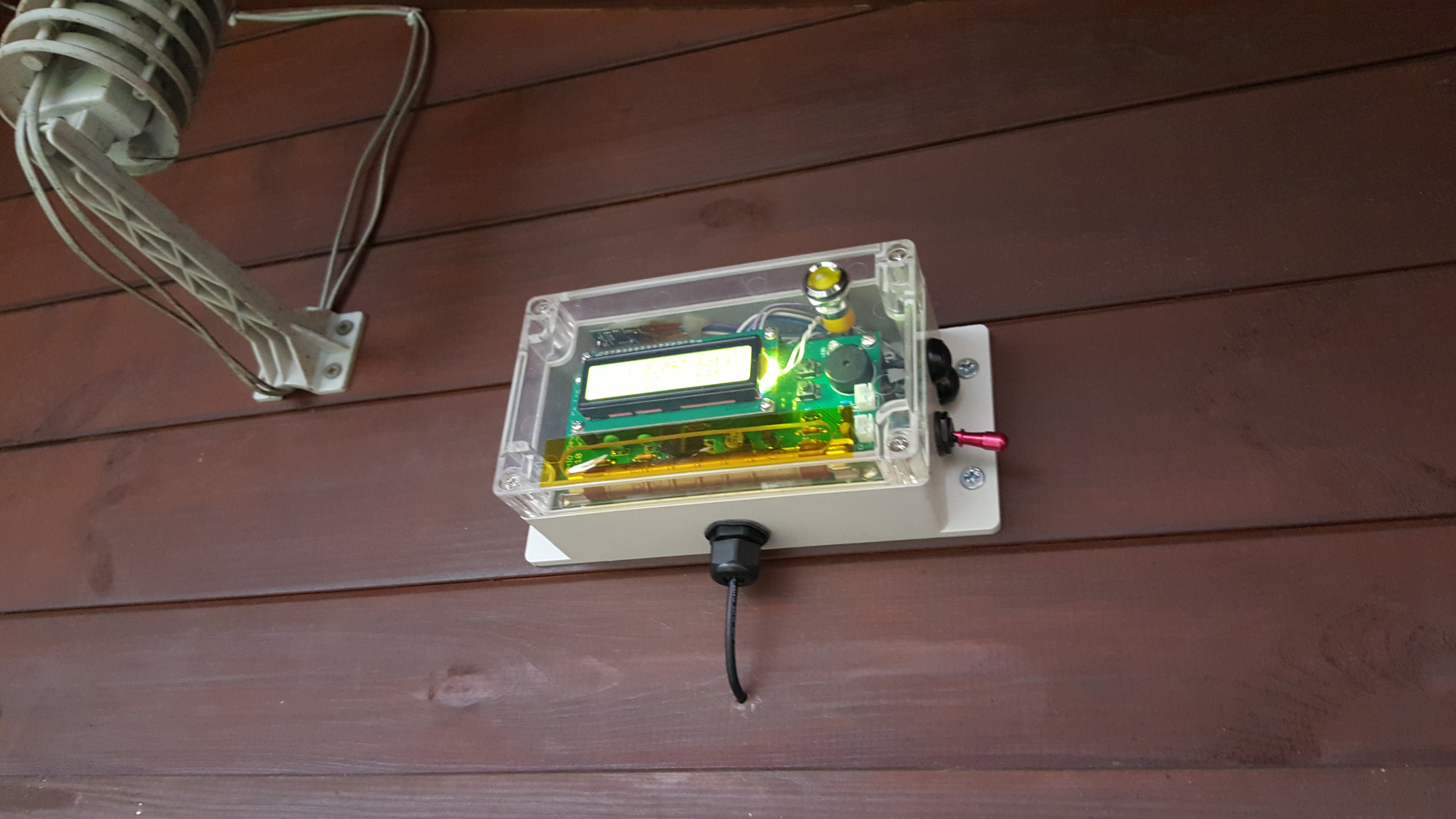
In reply to a nzoomed's question on radmon.org: Im wanting to build an outdoor monitoring station with an SBM20 and not sure if its good to use a PVC pipe to place the tube inside? Obviously im wanting something as thin as possible to let as many particles through as possible. Are there some materials I should avoid? Are beta particles typically encountered much in the environment? Should I only be worried about cosmic rays? Im not sure how much background radiation is from other sources, but im expecting there is a great deal from alpha decay from the likes of radon etc which will never be
-
A very strange one here. I'm looking for answers but after scouring the internet I doubt I'll find any. My SBT-10A tube has been destroyed for some reason unbeknown to myself. The mica window has completely shattered. I have no idea why. In the pictures you can see the damage. It appears that the mica has either reacted with something or it has catastrophically degraded. The last time I used this was on 20/10/2018 (so less than a month ago) when I decided to setup a reasonably controlled comparison of all my sources (I'll post about that in the future). It was working perfectly then and got
-
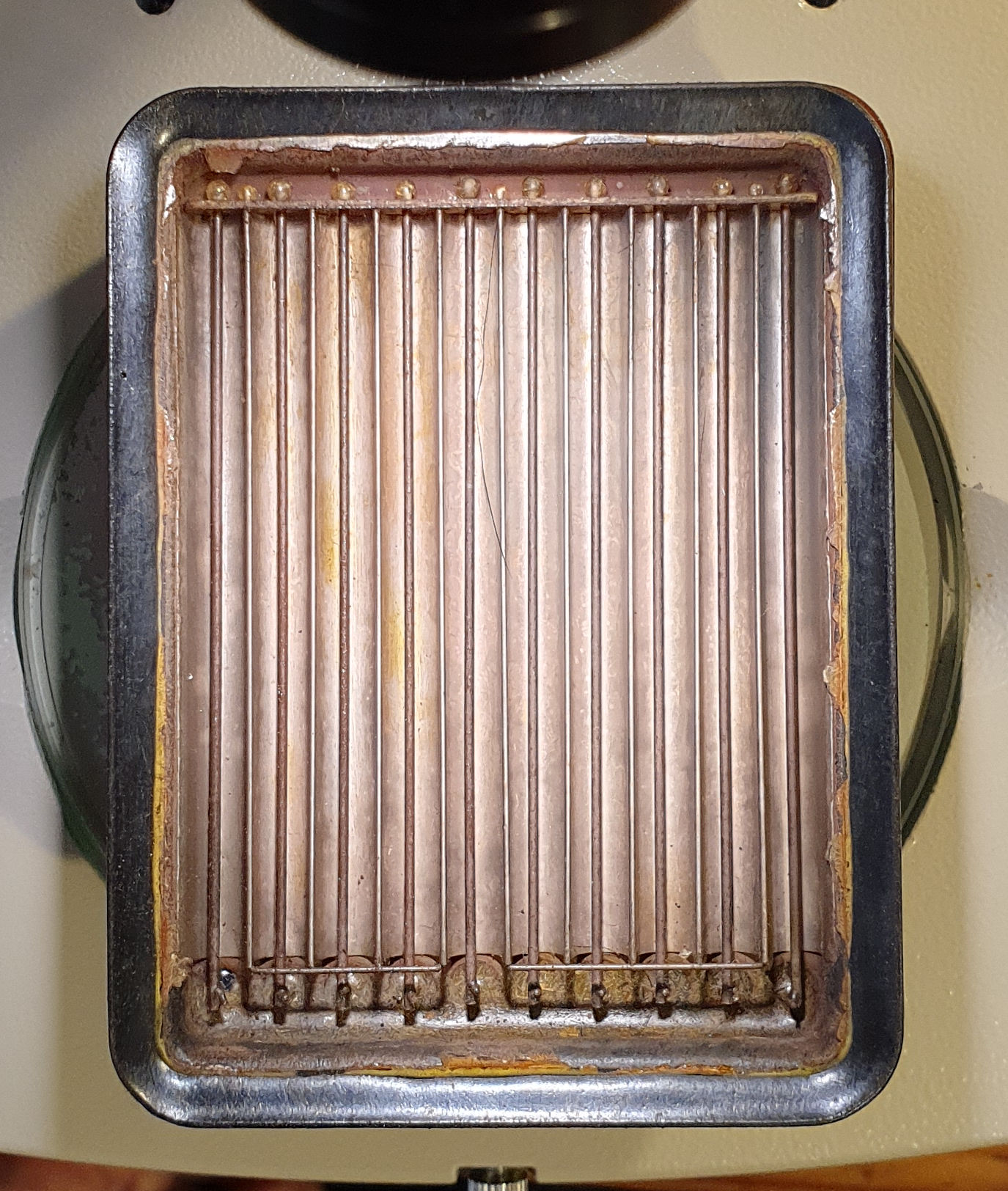
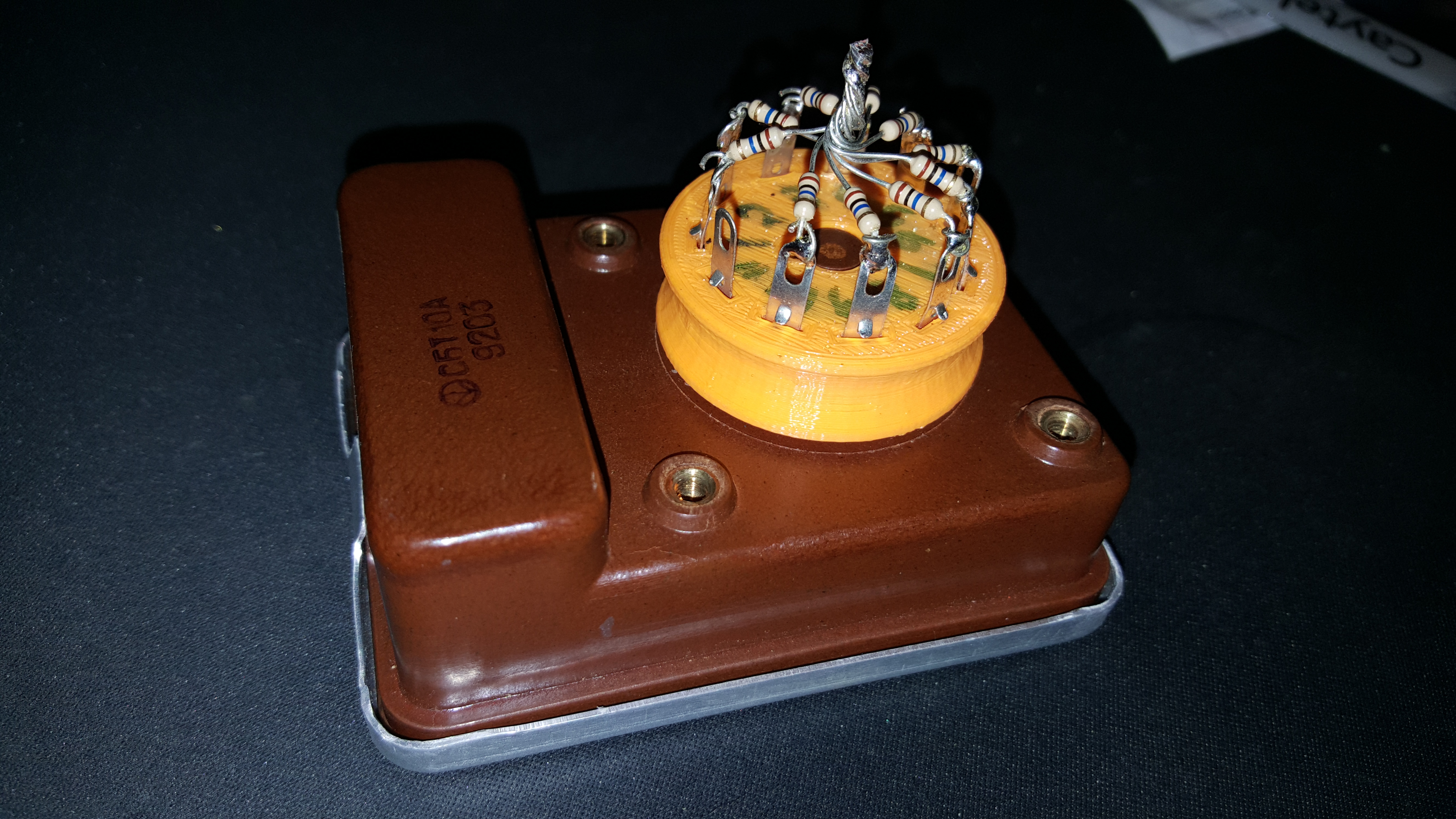
A radmon.org user was having avalanche issues with their SBT-10 Geiger Muller tube. Doing a little research I found a little information stating that each anode on the GM tube (there is ten in total) should have it's own quenching resistor. I have mine set with a 10Mohm on each anode (see pic below) and appears to work OK, although I haven't had it running for long and just some simple tests. When I got it I scoured the web looking for info but it seems there is very little. One recurring theme was that the voltage and resistor(s) did play a very big part on getting correct counts from the
-
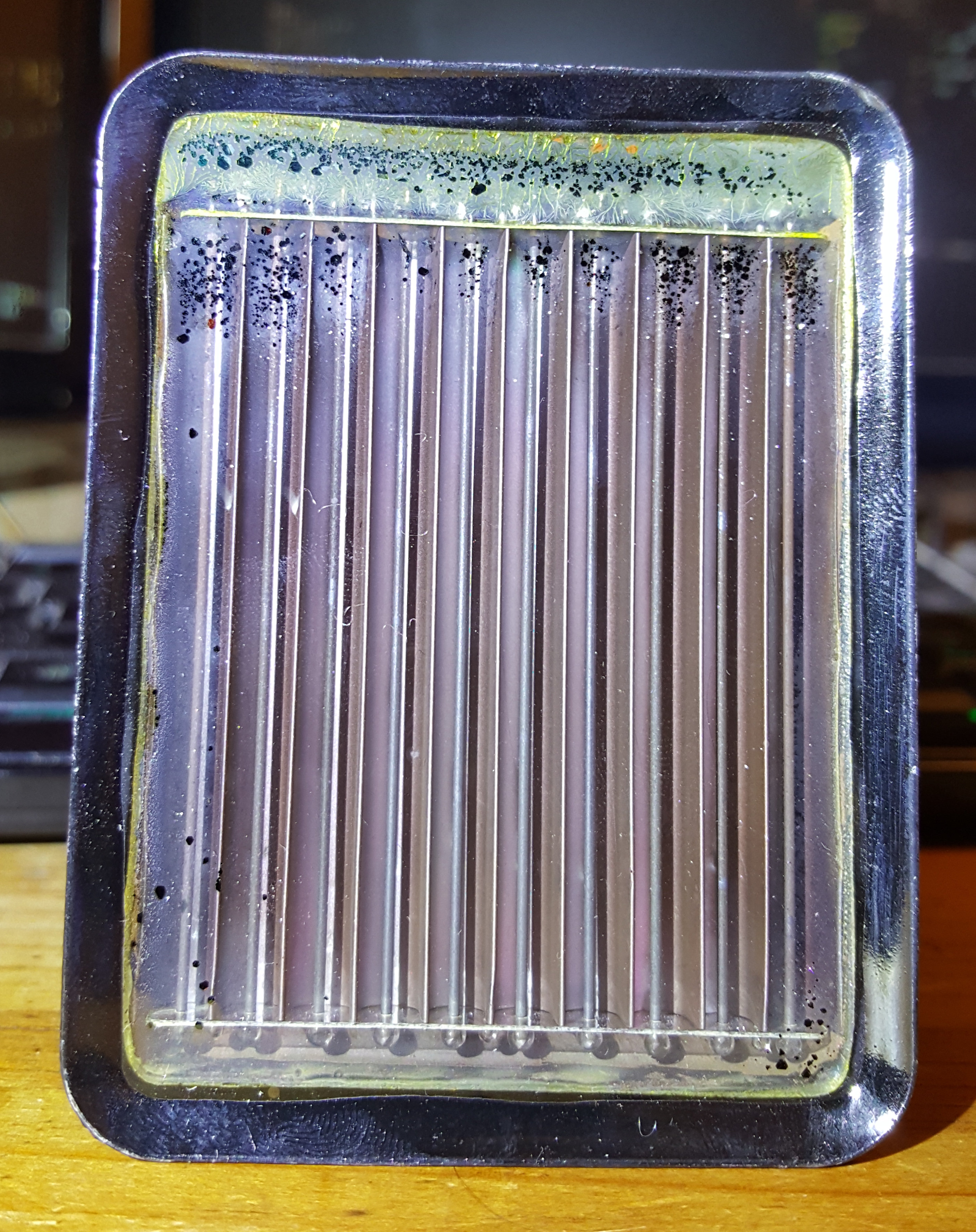
A radmon.org user posted a question asking what the black spots were in his SBT-10. I had recently bought one of these from a seller in Ukraine and mine too has the black spots similar to the one posted on radmon.org. The seller assured me that mine was NOS (new-old-stock), meaning whilst it is old, it has merely been stored for the time and never used. It appears to be working correctly regardless of it's condition. I tested each element separately and each reads around the same CPM as the others so I'm assuming that whilst cosmetically nasty, the black spots appear to do no harm. What