Blinky's Lab

Monitoring

All posts tagged Monitoring by Blinky's Lab
  • Posted on
    Featured Image
    A little gem - The Yaorea YRG01 Pt.1 - Review
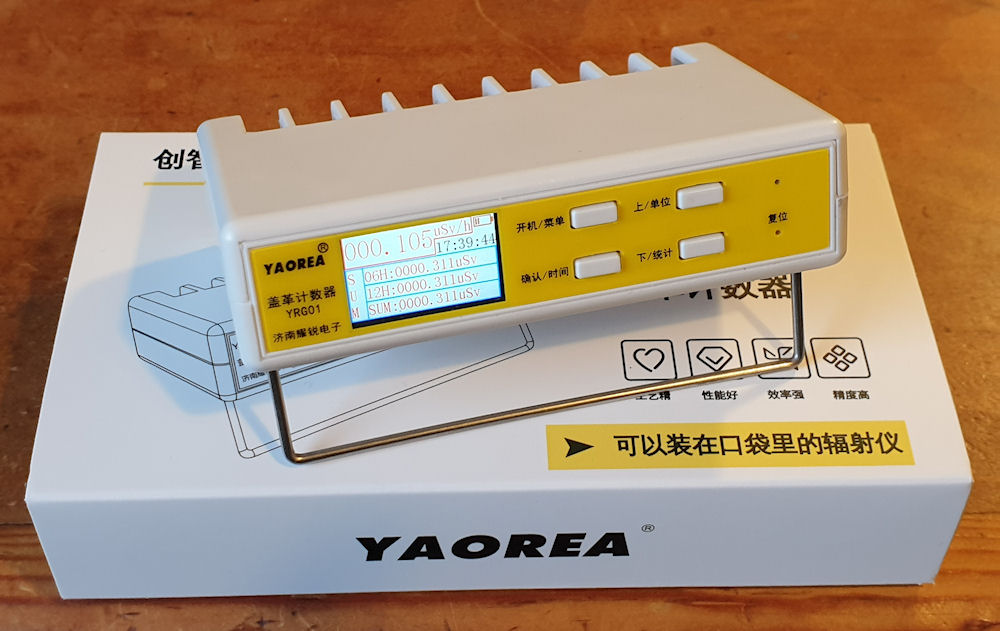
    Yaorea YRG01 I bought another cheap Chinese counter from Aliexpress and I am impressed, especially for the price of £27 shipped to my door. Despite its cheap appearance it actually offers a lot of bang for buck. I haven't looked into it closely, but there seems to be a lot of attention to detail, and I reckon whoever designed this really gave a damn about it. 😄 It came up in suggested products on Aliexpress and I wouldn't have bothered about it if not for the fact that someone reviewed it and posted pictures of its insides. "Okay, a glass tube... Ooh a separate PSU board with a big hunking
  • Posted on
    Featured Image
    New Weather Station Build Pt.5
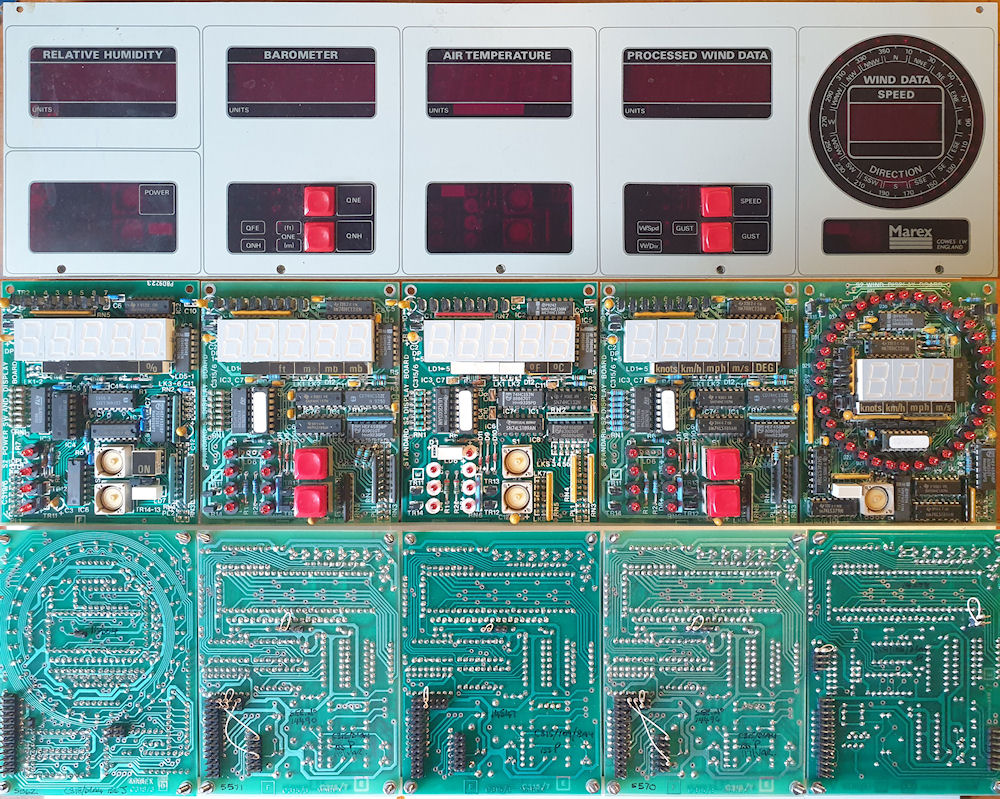
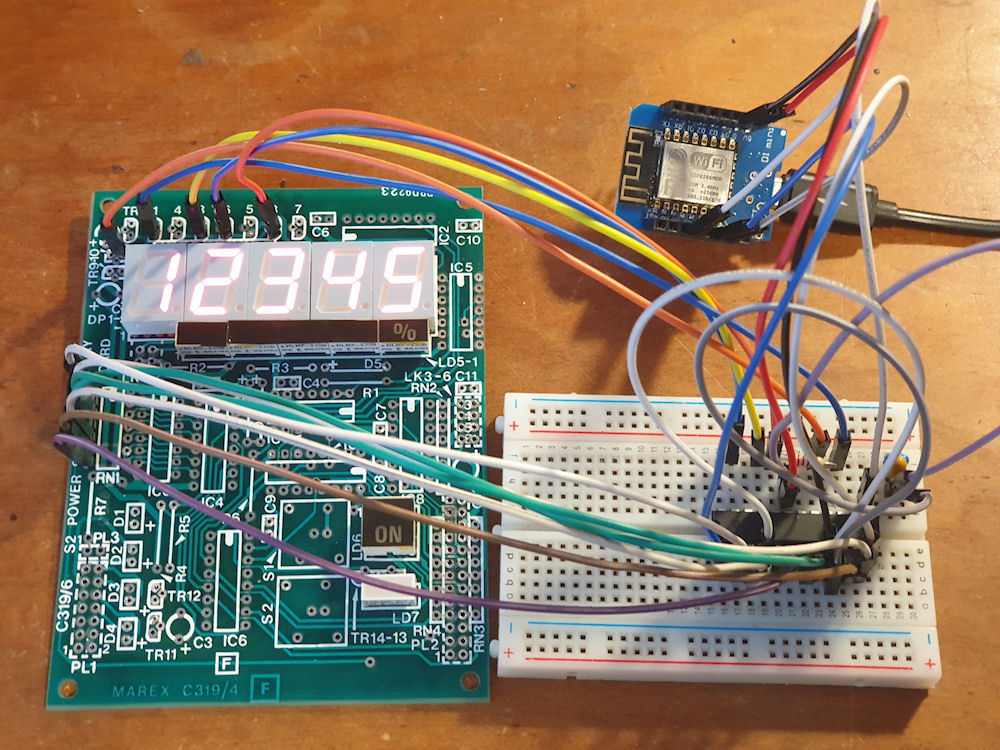
    Update #5 Progress!!! 😊 MAX7219 LED controller (for common-cathode LEDs) running common-anode 7 segment displays. The brightness isn't quite what I could like, but it should be fine. I may be able to tweak it a little, but the MAX7219 wasn't really designed for running common-anode, so if not, I can't complain. Now to make up a little daughter board with the MAX7219 and try it out for fitment/space etc. If all is good, then I'll make some more and get the display boards retrofitted with the new controllers. This IC will daisy chain too, but I might have to get a little clever with the code as
  • Posted on
    Featured Image
    New Weather Station Build Pt.4
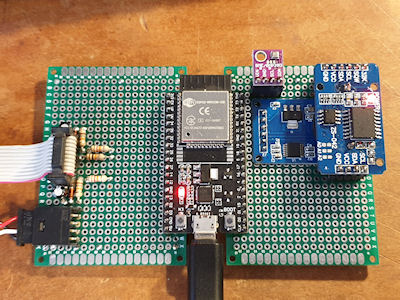
    Update #4 My head still hurts.... But I am making progress. I have added an RTC ( DS3231 ), a micro SD card and a GPS receiver ( NEO-6M GPS Module ). The RTC is just for keeping time and date. The RTC will be set every hour, or 24, or whenever, to the GPS time. I need to have a think about UTC/BST for recording and displaying. Do I record everything in UTC and have adjustment on display, or do I set the RTC twice a year into UTC/BST and record using UTC/BST. The latter would be the most beneficial for displaying and graph creation, but with a caveat that 1 hour of readings will get screwed up
  • Posted on
    Featured Image
    New Weather Station Build Pt.3.1
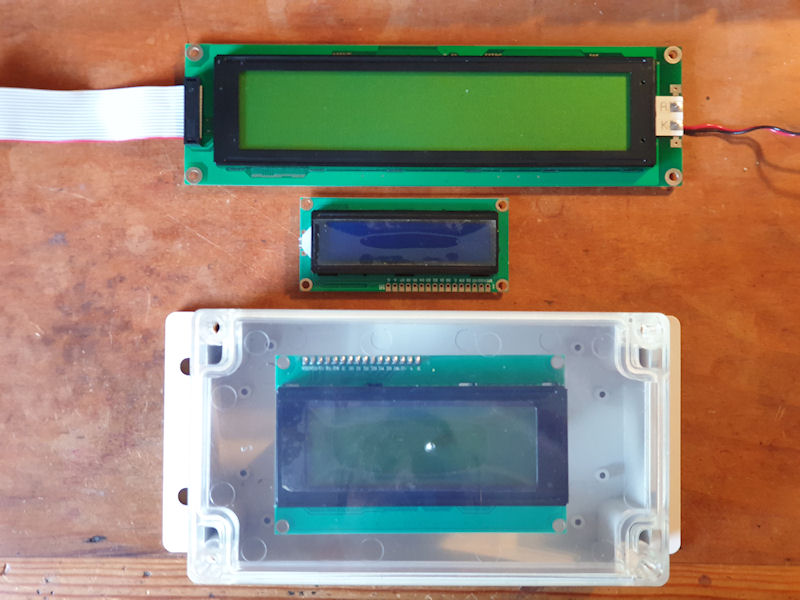
    😢 Oh no! The large 40x4 LCD I have is too big for the enclosure I have, and want to use. The next size up enclosure with transparent front is twice the size, so whilst would fit the LCD there would be much wasted space and it wouldn't look right. So I can use a 20x4 LCD that will fit, but only half the display of the big one. I'll use the 20x4 for now and then change to the 40x4 if I find a suitable enclosure. I like the full transparent front and opaque back and sides. Fully transparent and it would look like a glass lasagne dish and I can't see the innards with an opaque front. Having the
  • Posted on
    Featured Image
    New Weather Station Build Pt.3
    I have just added 'wind chill' to the mix and seems to be calculating correctly. I had to put in some static numbers for testing as wind chill is only valid when the wind is moving more than 3mph (4.83kph/1.34ms) and the temperature is below 10°C. This is the formula: T_wc = 13.12 + 0.6215 * T_a * (0.3965 * T_a - 11.37) * v^0.16 Where: T_wc is the wind chill in Celsius temperature scale, T_a is the air temperature in degrees Celsius, v is the wind speed in kilometers per hour. This is the output with static wind (10MPH) and temp (9°C): Temperature: 9.00 | Humidity: 45.36 | Dew Point: 0.00 |
  • Posted on
    Featured Image
    New Weather Station Build Pt.2
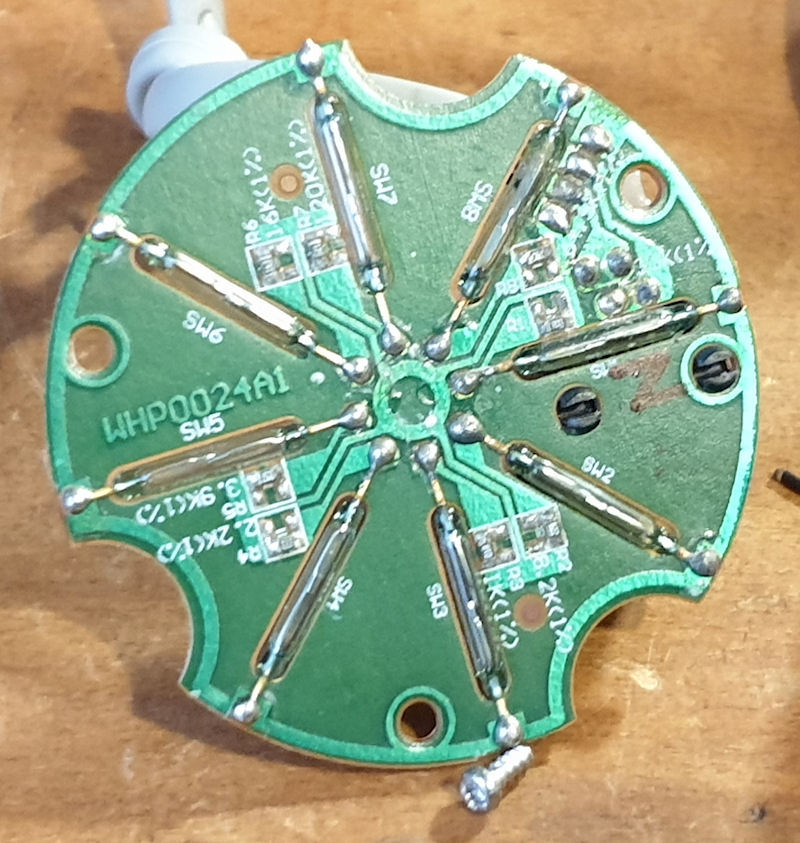
    The sensors are good! The electronics are that is. I've checked over the anemometer, wind vane and rain gauge and all are working properly. They are going to need a little work to get them back to shipshape again and I may even pot them in, although the actual board have fared quite well. Only a bit of dull solder on the wind vane PCB. As you can see form the images all the sensors use good, old, conventional reed relays and a magnet on the spinney bit. I may swap these out for hall effect sensors in the future. One thing I would like is a better resolution for the wind vane. As it stands I
  • Posted on
    Featured Image
    New Weather Station Build Pt.1
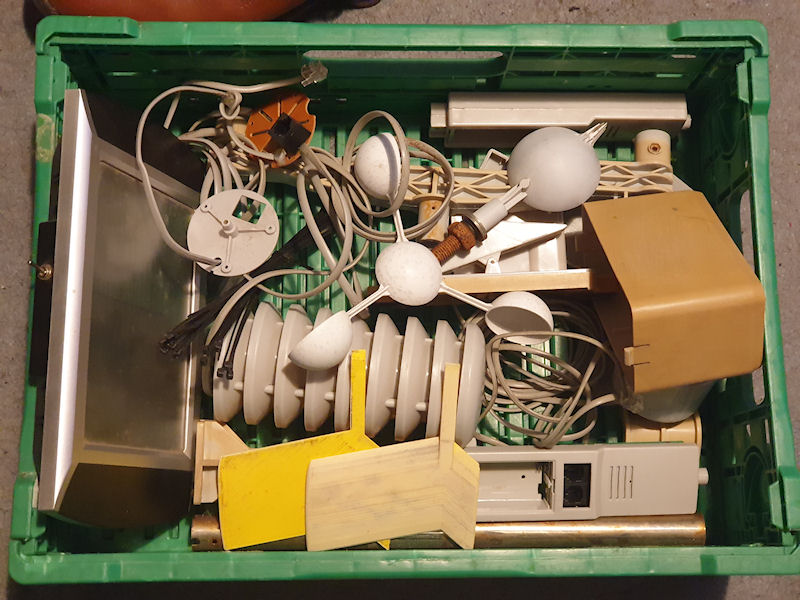
    About 4 years ago my weather station failed. It was only a cheap WH1080 from Maplin (remember them?), but it did it's job for about 8 years. The sensors were getting a bit janky and then the transmitter stopped working. I managed to find a replacement transmitter in China and that did pair with my receiver, but I think the receiver is also broke, or the two aren't quite compatible as I can't save the settings on the receiver and Cumulus is telling me that it is getting some duff data. Now it lies in pieces as shown in the picture. Next stop.... the scrap bin. Goodbye old faithful cheapo
  • Posted on
    Featured Image
    Radmon.org Mini Monitor (lets me know when it is offline)
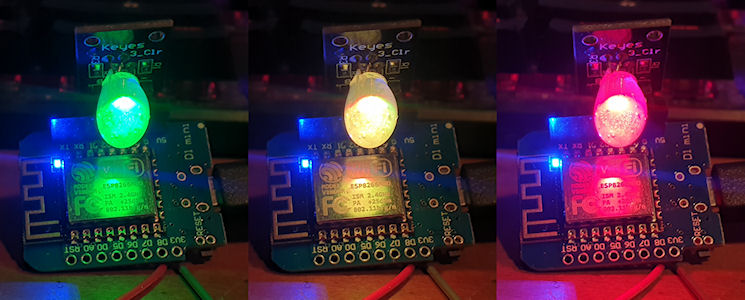
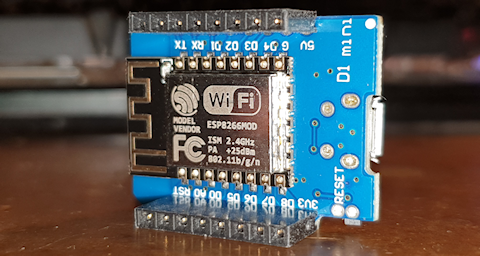
    I knocked up a simple monitor to easily see if radmon.org is up or down. It uses an ESP8266 (Wemos D1 mini clone) and a single RGB LED. It simply polls radmon.org by asking for a response from the server. If it gets the reply it is expecting in a timely manner it lights the LED green. If it doesn't get the reply it wants, or times out, the LED changes to orange and sets a fail counter +1. If it receives the correct reply again it goes back to green, but after 3 consecutive failures the LED lights red. There really isn't much more to it. There are positions in the code where an alarm or
  • Posted on
    Featured Image
    Arduino Uno, Mega2560 & Pro Mini + WizNet 5100 ethernet shield - Bare-bones code
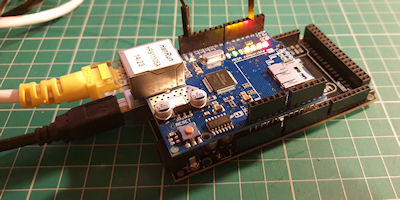
    ** Note: This is for submission of CPM readings to radmon.org. This was working at the time of writing but updates to libraries may cause issues. Here is some Arduino code for the Arduino Uno, Mega2560 and Pro Mini with WizNet W5100 ethernet shield. This is bare-bones code only. It does only these things: receives pulses on pin 2 (Uno, Mega & Pro Mini), calculates CPM and submits it to Radmon.org (via ethernet shield) every 60 seconds. It has a little debugging that can print to serial and I have also added CPM print to serial (much like the NetIO GC-10) that can be used with the Radlog
  • Posted on
    Featured Image
    ESP8266 - Wemos D1 Mini - Arduino Code - Bare-bones code, verified working
    ** Note: This is for submission of CPM readings to radmon.org. Here is some Arduino code for the ESP8266 written and tested on a Wemos D1 Mini. This is bare-bones code only. It does only these things: receives pulses on GPIO 13 (physical pin D7 on Wemos D1 Mini), calculates CPM and submits it to Radmon.org (via WiFi) every 60 seconds. It has a little debugging that can print to serial, flashes the internal LED when an interrupt event is detected and I have also added CPM print to serial (much like the NetIO GC-10) that can be used with the Radlog windows logging software - and that is it.