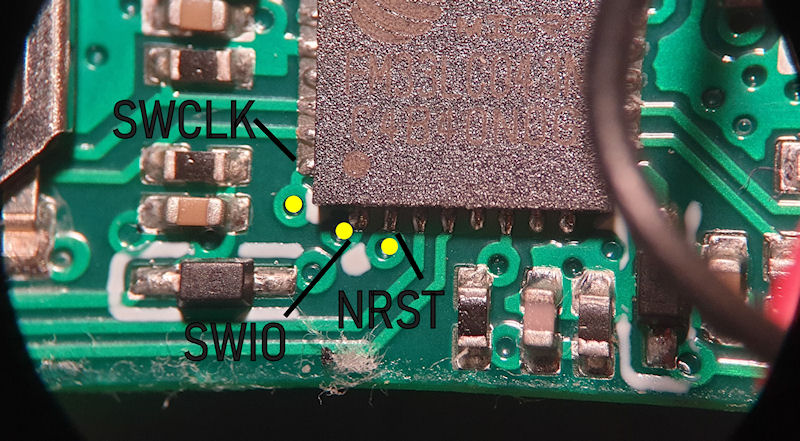
Archived from radmon.org - originally posted 12/06/2023 I was asked by Gissio to try and download the original firmware from my HFS-P3, so I tried. Alas, no joy so far. ☹️ Under the battery (stuck down with sticky tape) is a pin header. Probably designed to have a pogo pin connector connect to it as there is no room to solder on an actual pin header. I just soldered wires to it directly. I managed to work out the pins by tracing the circuit, but I had to use my microscope as the connections on the MCU really are that small! I took photos of both sides and flipped one then overlaied one over
-
-
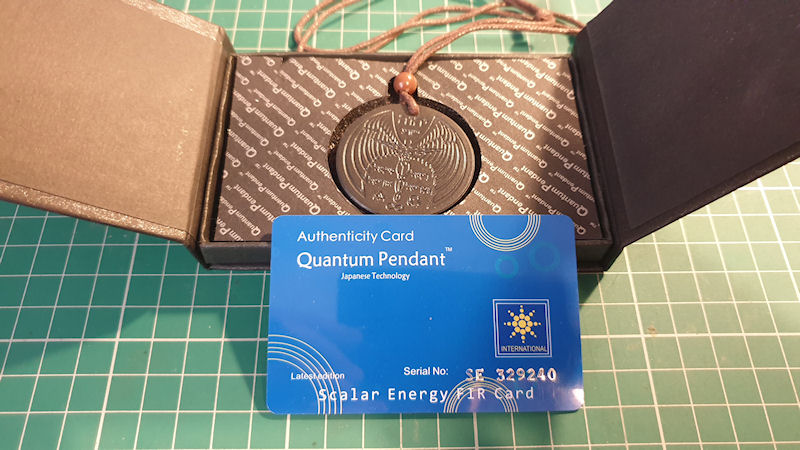
Archived from radmon.org - originally posted 09/03/2023 A while ago I saw a video (below) where the creator had purchased several 'Negative Ion Energy' products that actually contain radioactive Thorium. Most of these products are wearable items and some other 'Nume' cards, or whatever they are. At the time I searched for these but seems they had all been pulled form the stockists shelves. Then I saw a more recent video by the same creator and searched again, and lo and behold, the same products are stocked up again and readily for sale - to unsuspecting people that may possibly actually wear
-
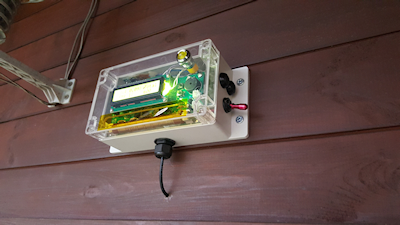
Archived from radmon.org - originally posted 25/02/2023 A cheap and easy way to change a blue LCD or OLED display to yellow/amber using Kapton tape. I don't like blue displays. I never have done. I have always found them to be harsh on the eyes, especially in dark environments. I also find them more difficult to read than green or yellow displays. Blue is a colour that is rarely found in nature. It really was a colour that was/is quite unnatural to the eyes until recent times. It reduces melatonin release into the body and can affect sleep. I discovered some years back that Kapton tape can
-
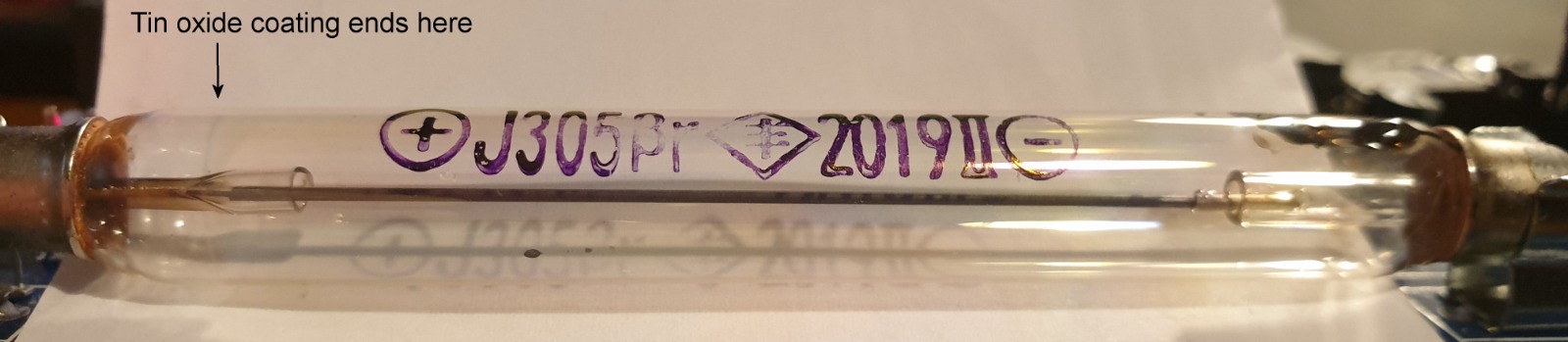
Archived from radmon.org - originally posted 29/01/2023 My J305βγ tube is very light sensitive so I made a quick video demonstrating this. I shine daylight (on a miserable cloudy grey day) on the tube at first, then a 365nm UV flashlight and finish off with daylight again. The effects seem to work only at the anode end and not at the cathode end. Doing a little research I found that the light sensitivity of GM tubes only occurs in glass walled tubes that have an external cathode. The specifications show this about the tube wall: Tin oxide Cathode, Coaxial cylindrical thin shell structure
-
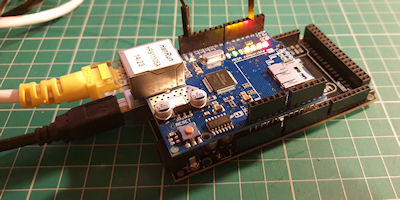
Archived from radmon.org - originally posted 12/12/2022 ** Note: This is for submission of CPM readings to radmon.org. This was working at the time of writing but updates to libraries may cause issues. Here is some Arduino code for the Arduino Uno, Mega2560 and Pro Mini with WizNet W5100 ethernet shield. This is bare-bones code only. It does only these things: receives pulses on pin 2 (Uno, Mega & Pro Mini), calculates CPM and submits it to Radmon.org (via ethernet shield) every 60 seconds. It has a little debugging that can print to serial and I have also added CPM print to serial (much
-
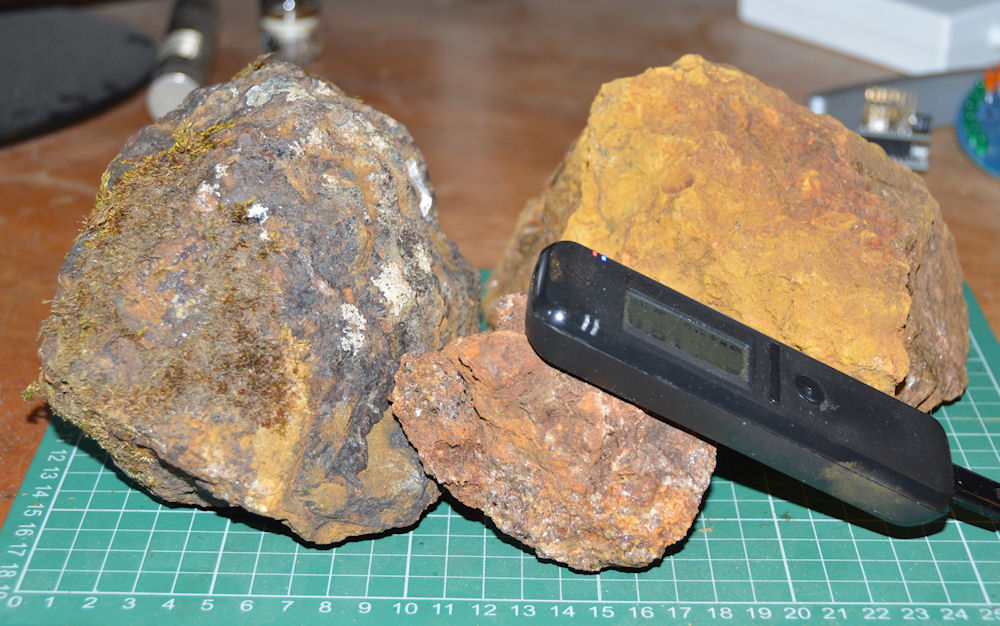
Archived from radmon.org - originally posted 13/11/2022 I recently obtained some radioactive rocks from an eBay seller for a low low price of..... £1 each! 😆 Plus £8 shipping each... 🫤 I didn't realise how much there really was until I weighed them, and they come in at a whopping 14.5 lbs, or 6.6 kg! 😯 I believe they have come from the South Terras Uranium Mine in Cornwall. The mine was closed back in 1930 and apparently the mine itself is inaccessible since then although someone gained access and took some pictures of the mine itself. It is still very radioactive now. Some of the buildings
-
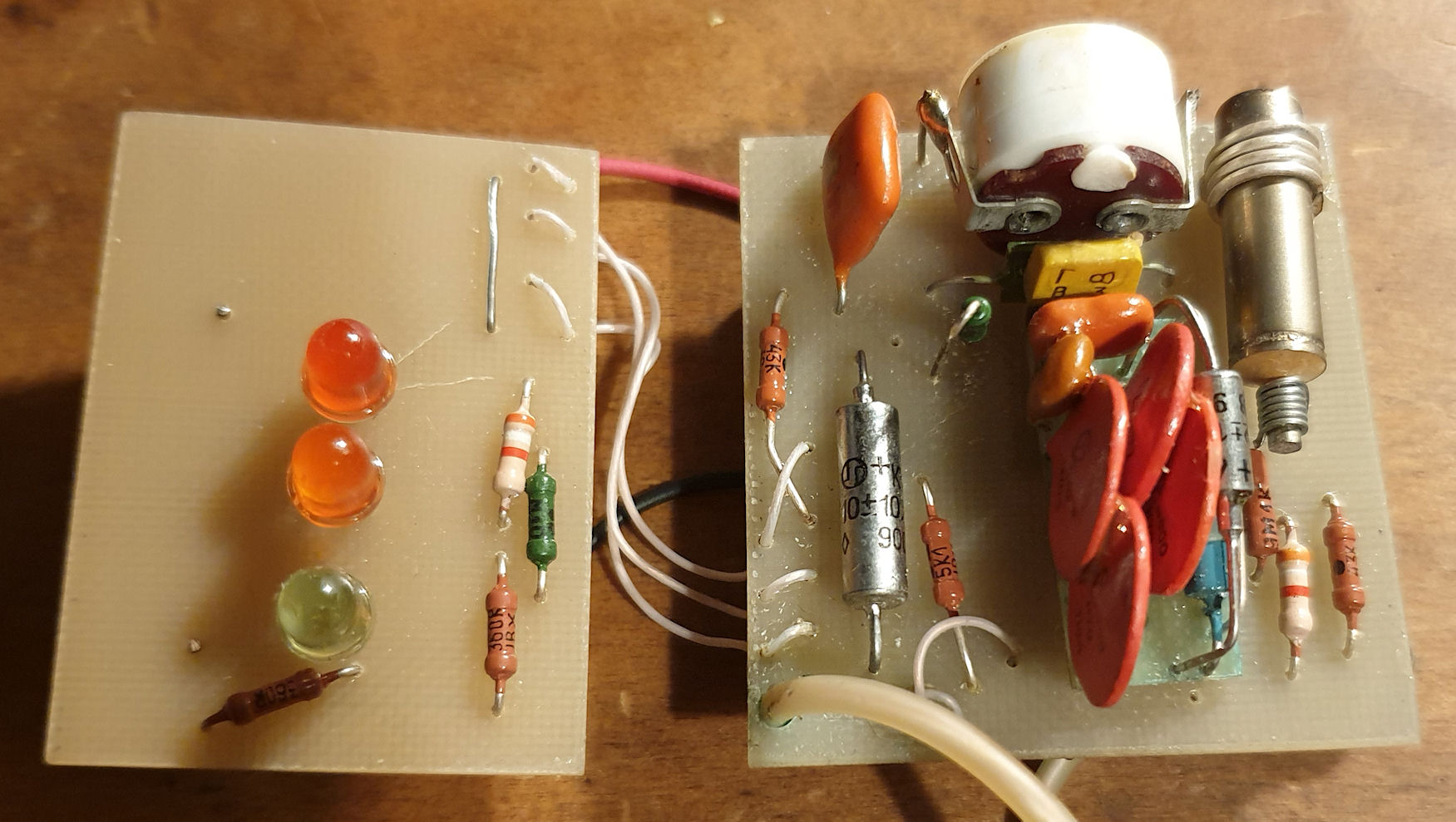
Archived from radmon.org - originally posted 16/02/2022 I was repairing an old Russian DP-5V counter yesterday and noticed an unusual neon/orange flashing glow coming from the probe PCB that I have never seen before, so decided to investigate. It is caused by two thyratrons on the board, flashing away with the clicks of the counter. They are similar to modern thyristors in their function. These thyratrons are filled with neon gas, hence their orange glow. This is from wikipedia: https://en.wikipedia.org/wiki/Thyratron Conductivity of a thyratron remains low as long as the control grid is
-
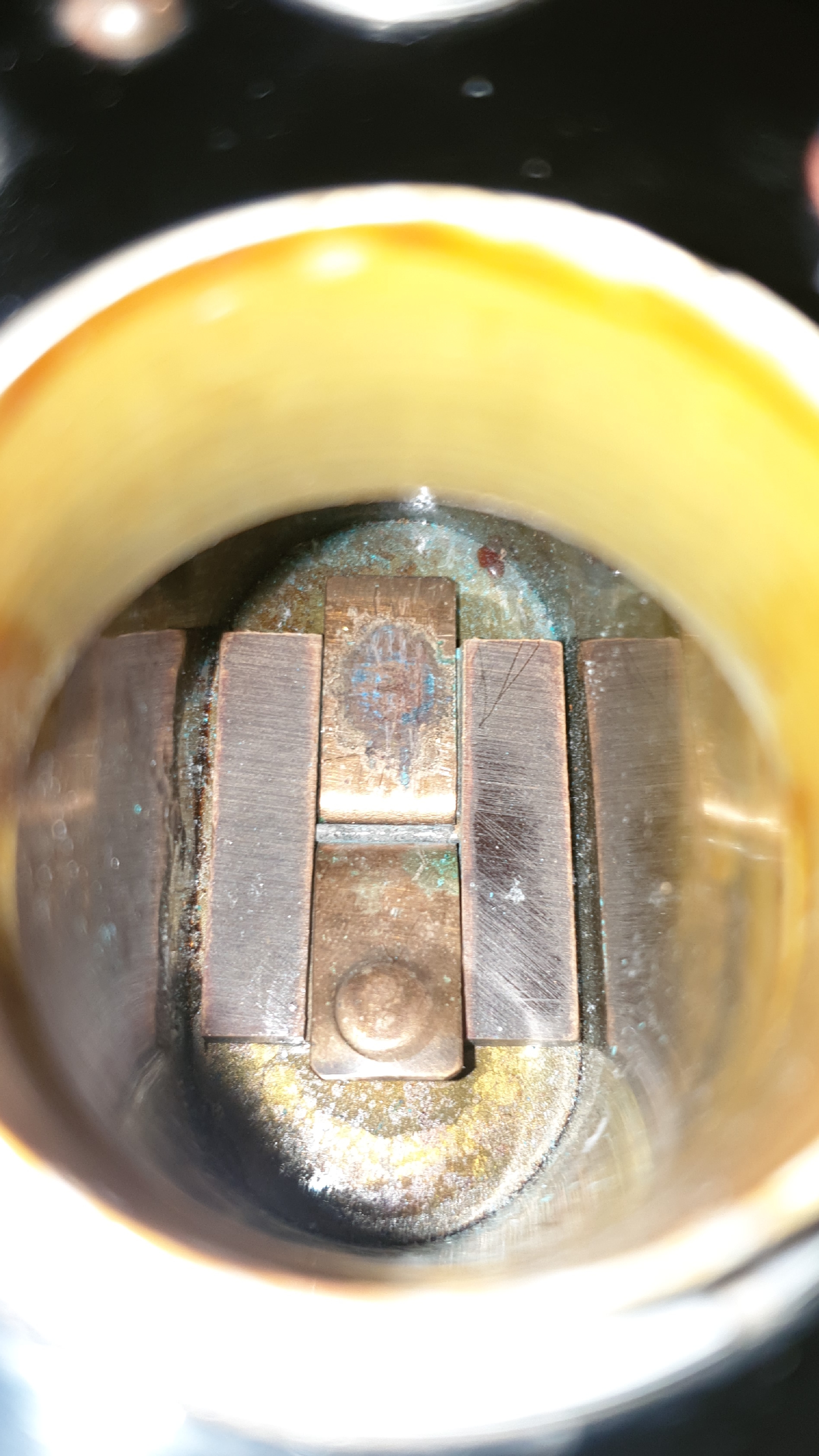
Archived from radmon.org - originally posted 13/02/2022 Following on from Pt.1 - Here are some pictures of the battery compartment. You can see the terminals at the bottom pivot in the middle like a seesaw, also with one battery inserted and then with two. I couldn't resist and took out the tube to have a look at it. It is rather large, pictured below next to a STS-5 tube (SBM-20 equivalent.) ↑ Seesaw battery terminals with pivot at the center. ↑ ↑ One battery inserted. ↑ ↑ Two batteries inserted. The cap has a large shaft that pushes down on the positive terminal, the battery is pressed down
-
- Posted on
- Featured Image
Archived from radmon.org - originally posted 06/02/2022 I have translated the manual with the help of a couple of internet AI translators. Attached below you will find a couple of PDFs of the original Russian manual and an English translation of the manual, also the text of the manual in .txt format. The PDFs quality isn't great as the images weren't great but they work. The text version is probably easier to read. A couple of things about operation that I was puzzled about were the mains/missing psu and missing battery. From reading the manual I'm assuming that this was in fact a "Lux" -
Archived from radmon.org - originally posted 05/02/2022 I have managed to power this up and it does work! 😊 I have also started reverse engineering it a little. I removed the two (brass?) strips and replaced them with wires so I can flatten the board out properly. The two strips were connecting the ground and VCC on the boards together. I haven't yet translated the manual, but I will in due time as I can't find a single thing about this counter on the internet at all and the info may be of use to others' too. In all it seems like a very basic counter with a quirky display. If I knew what the