Here are a couple of interesting videos taken inside the damaged Chernobyl reactor 4. The following comment was posted on the first video that lends a little information about who and when the video was recorded. The second video (in Russian) I picked up from the comments of the first as someone was asking what kind of protective clothing did they wear. It's not quite as interesting as the first video, but still interesting nonetheless. Comment from the first video by user J4yChu: I’ve researched, and come up with a few things about the video! The person filming is Alexander Kupny. He was a
-
-
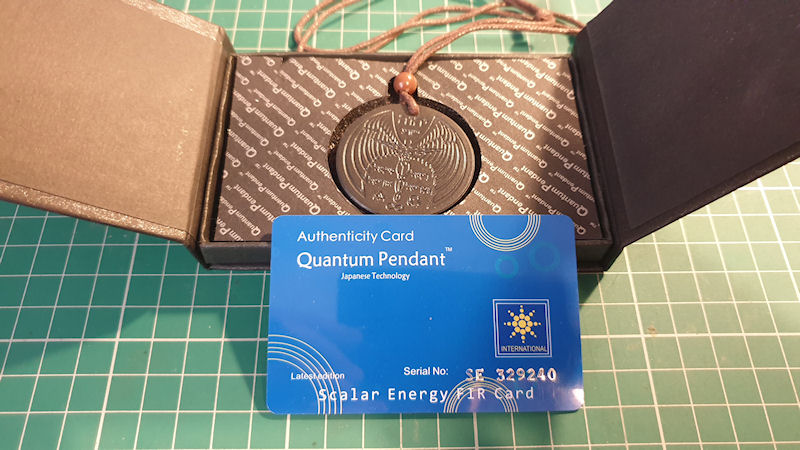
For all of the posts in the Negative Ion Energy Ju-Ju series, click here. A while ago I saw a video (below) where the creator had purchased several 'Negative Ion Energy' products that actually contain radioactive Thorium. Most of these products are wearable items and some other 'Nume' cards, or whatever they are. At the time I searched for these but seems they had all been pulled form the stockists shelves. Then I saw a more recent video by the same creator and searched again, and lo and behold, the same products are stocked up again and readily for sale - to unsuspecting people that may
-
A cheap and easy way to change a blue LCD or OLED display to yellow/amber using Kapton tape. I don't like blue displays. I never have done. I have always found them to be harsh on the eyes, especially in dark environments. I also find them more difficult to read than green or yellow displays. Blue is a colour that is rarely found in nature. It really was a colour that was/is quite unnatural to the eyes until recent times. It reduces melatonin release into the body and can affect sleep. I discovered some years back that Kapton tape can change blue displays into yellow/amber just by simply
-
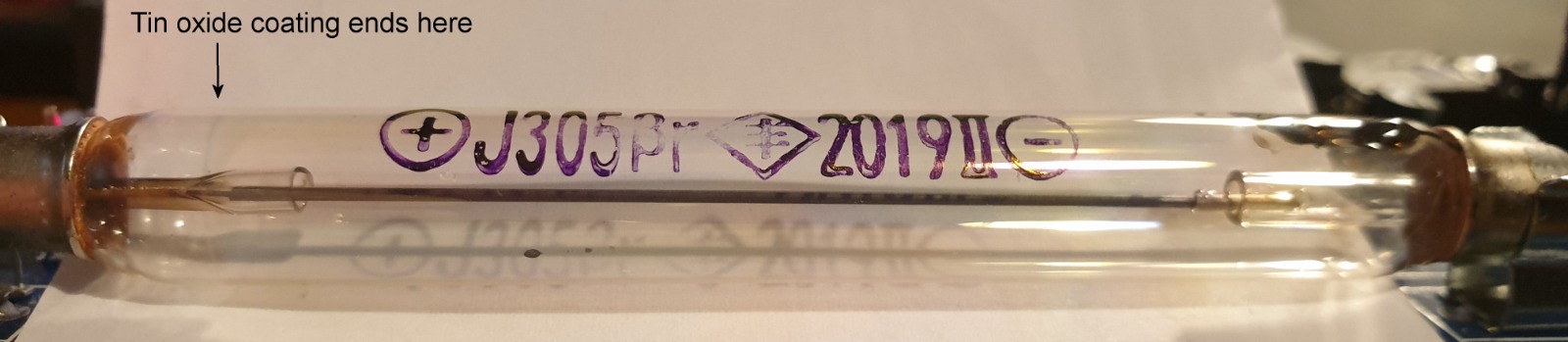
My J305βγ tube is very light sensitive so I made a quick video demonstrating this. I shine daylight (on a miserable cloudy grey day) on the tube at first, then a 365nm UV flashlight and finish off with daylight again. The effects seem to work only at the anode end and not at the cathode end. Doing a little research I found that the light sensitivity of GM tubes only occurs in glass walled tubes that have an external cathode. The specifications show this about the tube wall: Tin oxide Cathode, Coaxial cylindrical thin shell structure (Wall density 50+-10cg/cm2). The cathode is on the exterior
-
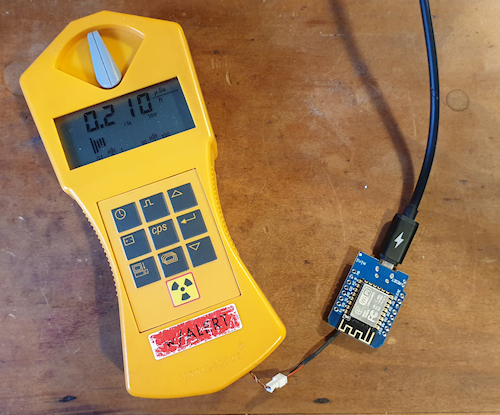
A member (of radmon.org) asked me if the Gamma Scout would/could work with radmon.org using the USB and software the counter came with. The answer to that is a simple, no, not out of the box, but it could be done with a quick hack. Simply add a couple of wires and connect them straight to an ESP8266 or similar MCU. This guide only covers the 'Alert' model. There may be differences with other Gamma Scout models. Here is how: Open up the Gamma Scout and locate the small transistor at the top left of the board, right above the pin header. There we are going to solder on a wire to the middle pin
-
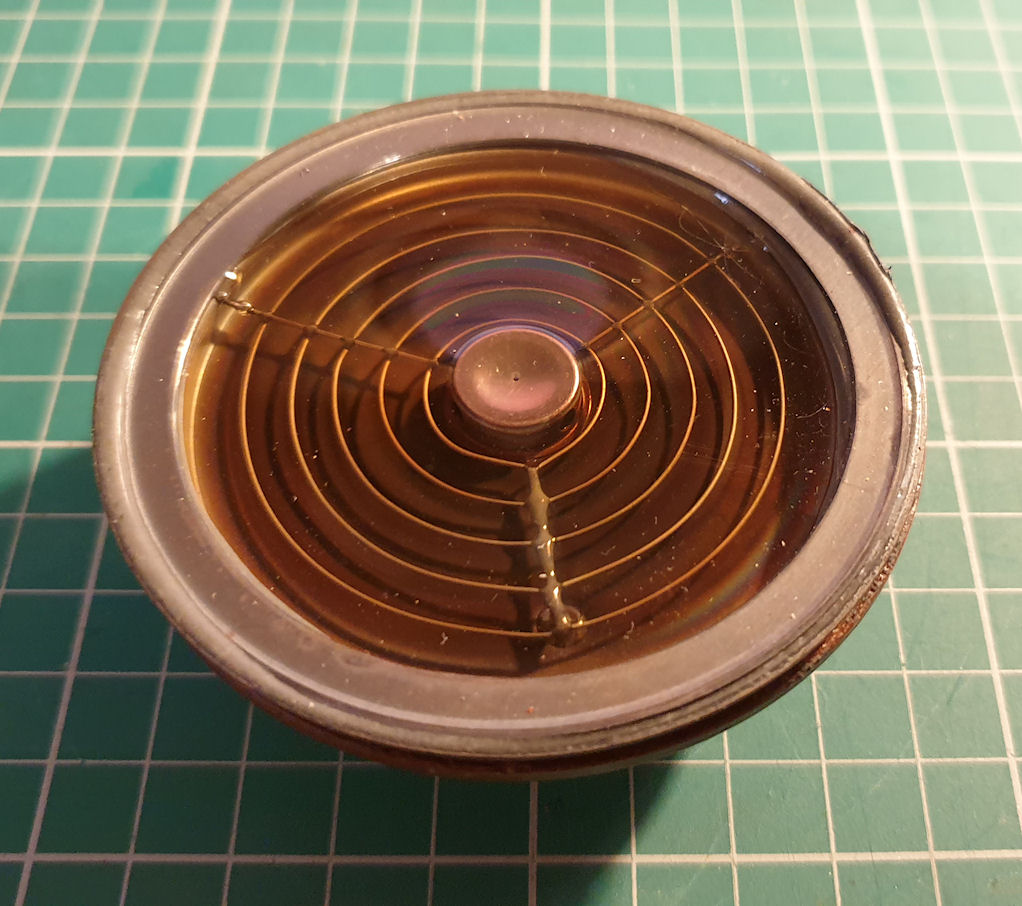
Here are some pictures and details about the SI-8b (СИ8Б) Pancake Geiger Muller tube. The adhesive failed between the tube and the Bakelite rear case on my tube, so it would be rude not to take it apart for a look! From what I understand this tube is designed for soft beta detection, but is also capable of alpha, hard beta and gamma, although calibration would center on soft beta particles. I did however read this from a website: 'This Geiger-Mueller tube is only sensitive to β and γ radiation. The calibration is only correct for the γ radiation (662keV) emitted from Cs-137.' I will test at
-
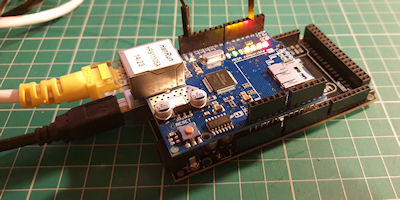
** Note: This is for submission of CPM readings to radmon.org. This was working at the time of writing but updates to libraries may cause issues. Here is some Arduino code for the Arduino Uno, Mega2560 and Pro Mini with WizNet W5100 ethernet shield. This is bare-bones code only. It does only these things: receives pulses on pin 2 (Uno, Mega & Pro Mini), calculates CPM and submits it to Radmon.org (via ethernet shield) every 60 seconds. It has a little debugging that can print to serial and I have also added CPM print to serial (much like the NetIO GC-10) that can be used with the Radlog
-
I have seen these kicking around the usual suspects (Ebay, Amazon, Aliexpress etc.) for a little while now and after watching (a not very informative YouTube video) I decided to get one and see just what it is and is it any good. TLDR; You get what you pay for. I paid about £32 for this from Aliexpress.com but have seen them for as little as £25 on Aliexpress.com and as high as £60 on Ebay and Amazon. The unit is very small and packs a tiny 150mAh LiPo cell, 48mm x 7mm (external dimensions) HH614 GM Tube, tiny OLED screen, a massive overkill ARM Cortex-M0 FM33LC043N MCU from Fudan Micro and
-
I recently obtained some radioactive rocks from an eBay seller for a low low price of..... £1 each! 😆 Plus £8 shipping each... 🫤 I didn't realise how much there really was until I weighed them, and they come in at a whopping 14.5 lbs, or 6.6 kg! 😯 I believe they have come from the South Terras Uranium Mine in Cornwall. The mine was closed back in 1930 and apparently the mine itself is inaccessible since then although someone gained access and took some pictures of the mine itself. It is still very radioactive now. Some of the buildings above ground still exist and I think that is where my
-
** Note: This is for submission of CPM readings to radmon.org. Here is some Arduino code for the ESP8266 written and tested on a Wemos D1 Mini. This is bare-bones code only. It does only these things: receives pulses on GPIO 13 (physical pin D7 on Wemos D1 Mini), calculates CPM and submits it to Radmon.org (via WiFi) every 60 seconds. It has a little debugging that can print to serial, flashes the internal LED when an interrupt event is detected and I have also added CPM print to serial (much like the NetIO GC-10) that can be used with the Radlog windows logging software - and that is it.