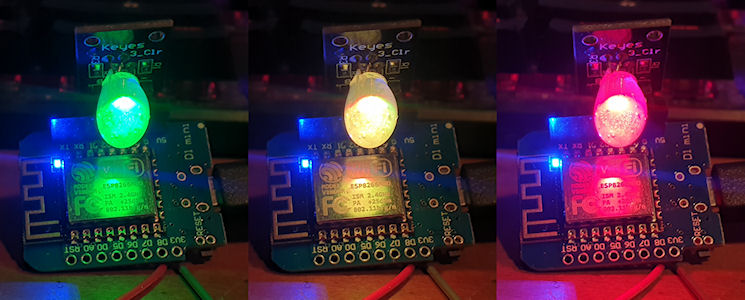
I knocked up a simple monitor to easily see if radmon.org is up or down. It uses an ESP8266 (Wemos D1 mini clone) and a single RGB LED. It simply polls radmon.org by asking for a response from the server. If it gets the reply it is expecting in a timely manner it lights the LED green. If it doesn't get the reply it wants, or times out, the LED changes to orange and sets a fail counter +1. If it receives the correct reply again it goes back to green, but after 3 consecutive failures the LED lights red. There really isn't much more to it. There are positions in the code where an alarm or
-
-
If you are interested in Chernobyl you will love this video. I had only heard of SKALA in the past, but nothing actually about it. This video gives a really good look into SKALA and it's operations. In this episode of Computers of Chornobyl series, we will talk about the mighty SKALA system, that controlled the RBMK reactors. This is the first-ever documentary about its design, architecture, operation, and software. It also tells the story of how it was preserved for posterity and reveals, what is common between it... and a control computer of Apollo spacecrafts. It took us nearly half a year
-
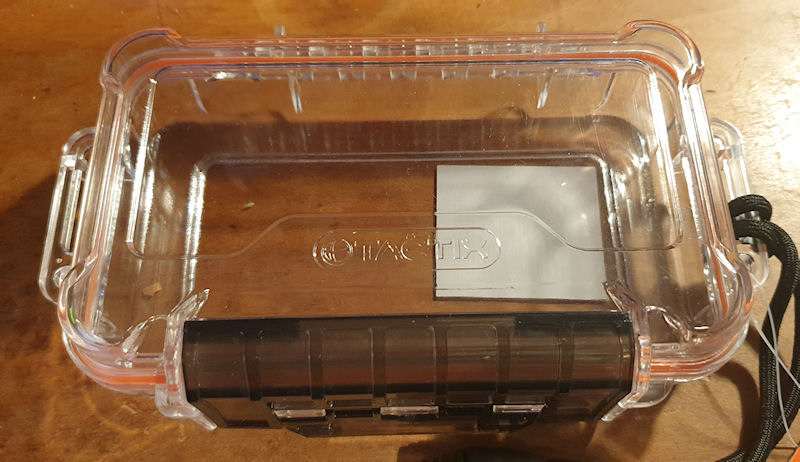
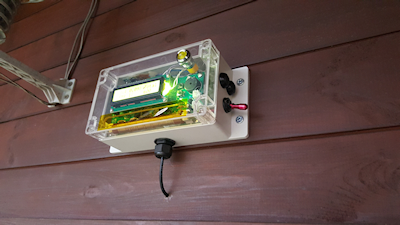
I bought one of these cases from my local Asda for about £14 a few years back. I thought it was that good I went back a week later and they had sold out and they never came back into stock again. I had a little search about on the internet and found them on eBay and Amazon - links below. I bought one from eBay to see if it was the same quality, and it is exactly the same. It is a really neat case. Appears to be very waterproof, even air tight and strong. I think it is made from Polycarbonate. I used mine to house a GPS Geiger counter project some time ago. I think I will use another for an
-
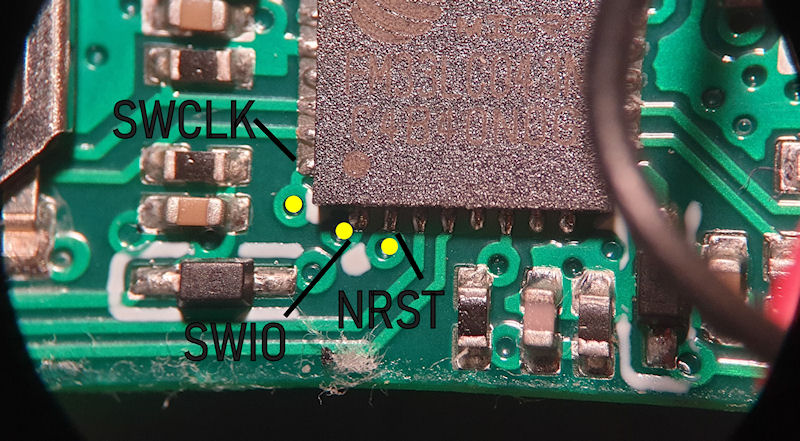
I was asked by Gissio to try and download the original firmware from my HFS-P3, so I tried. Alas, no joy so far. ☹️ Under the battery (stuck down with sticky tape) is a pin header. Probably designed to have a pogo pin connector connect to it as there is no room to solder on an actual pin header. I just soldered wires to it directly. I managed to work out the pins by tracing the circuit, but I had to use my microscope as the connections on the MCU really are that small! I took photos of both sides and flipped one then overlaied one over the other so I could line up the vias on the board. You
-
A cheap and easy way to change a blue LCD or OLED display to yellow/amber using Kapton tape. I don't like blue displays. I never have done. I have always found them to be harsh on the eyes, especially in dark environments. I also find them more difficult to read than green or yellow displays. Blue is a colour that is rarely found in nature. It really was a colour that was/is quite unnatural to the eyes until recent times. It reduces melatonin release into the body and can affect sleep. I discovered some years back that Kapton tape can change blue displays into yellow/amber just by simply
-
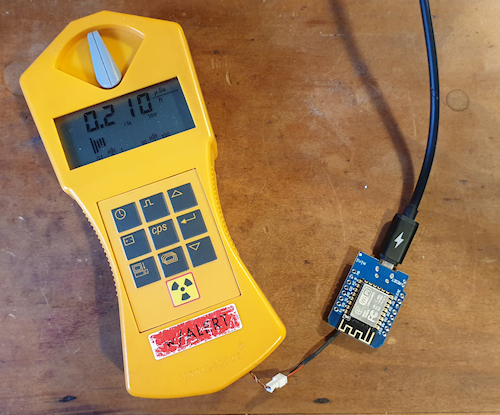
A member (of radmon.org) asked me if the Gamma Scout would/could work with radmon.org using the USB and software the counter came with. The answer to that is a simple, no, not out of the box, but it could be done with a quick hack. Simply add a couple of wires and connect them straight to an ESP8266 or similar MCU. This guide only covers the 'Alert' model. There may be differences with other Gamma Scout models. Here is how: Open up the Gamma Scout and locate the small transistor at the top left of the board, right above the pin header. There we are going to solder on a wire to the middle pin
-
I was repairing an old Russian DP-5V counter yesterday and noticed an unusual neon/orange flashing glow coming from the probe PCB that I have never seen before, so decided to investigate. It is caused by two thyratrons on the board, flashing away with the clicks of the counter. They are similar to modern thyristors in their function. These thyratrons are filled with neon gas, hence their orange glow. This is from wikipedia: https://en.wikipedia.org/wiki/Thyratron Conductivity of a thyratron remains low as long as the control grid is negative relative to the cathode because the grid repels
-
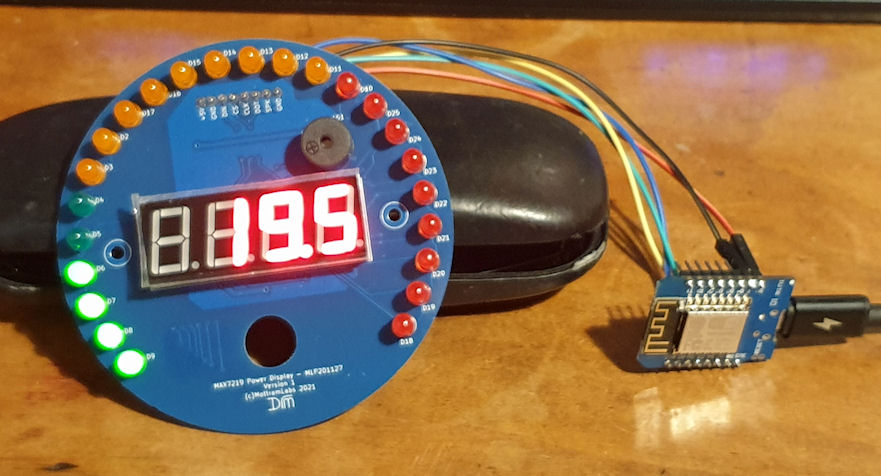
[Updated: 22/12/2021] Its the first day of holidays and I'm bored already.... So I cooked up a neat wifi/wemos d1 mini/arduino/LED display for displaying a station's current CPM. It works by simply connecting to one's Wi-Fi and then goes to the URL, pulls the data, strips the first space and everything afterwards then converts what is left to a float (the CPM count from the start of the string) and displays it. The bar graph LEDs are mapped from 0 to 100 CPM at full scale deflection, but the 7 segment display will display up to 999.9 CPM, and after that will just display - - - - lol. It's
-
I have bought a 'PBI Microbial Air Sampler SAS Super 90' just for the simple fact it looked proper funky! I have no idea if it works, or how it works, or even exactly what it does, but bought it for shits and giggles. I paid £15. Working, they are going for about £1000! I care not for testing microbes in the air, so I figure I can make something with it. So far I have thought I can turn it into a ridiculously powerful flash light. Something around 100w LED. I could use a liquid cooler in the body, LED and smallish heatsink at the end, use the display for something, temperature, power and
-
In reply to a nzoomed's question on radmon.org: Im wanting to build an outdoor monitoring station with an SBM20 and not sure if its good to use a PVC pipe to place the tube inside? Obviously im wanting something as thin as possible to let as many particles through as possible. Are there some materials I should avoid? Are beta particles typically encountered much in the environment? Should I only be worried about cosmic rays? Im not sure how much background radiation is from other sources, but im expecting there is a great deal from alpha decay from the likes of radon etc which will never be