
- Posted on
- • Gamma spectroscopy
DIY Radiation Shilded Chamber - for Gamma spectroscopy
- Author
-
-
- User
- Mr Blinky
- Posts by this author
- Posts by this author
-
I want to build a radiation shielded chamber for Gamma spectroscopy using my Radiacode 103. After batting some ideas about on another thread this is what I have so far:
- Outer case is 6mm steel (mild steel) - This could be a square tube section, or made from sheet.
- Inner case is the same as the outer and has 60mm x 60mm to 75mm x 75mm (thereabouts) space in the center for the Radiacode and source.
- Internal length of the chamber will be ~200mm. Space between the inner case and outer case will be filled with lead, ~25mm thick.
- Tabs/flange on both caps and outer case to put bolts through to fix the end caps in place when it is being used. The bolts could be thumb turn screws or similar.
- Caps made to slide over the outer case with ~25mm lead in each end.
- 0.5-1mm copper lining the chamber walls and end caps.
I should be able to knock this up fairly easily from scrap. If the outer and inner case need welding, the welds can be done on the inside of the outer case and the outside of the inner case as the distance from corner to corner is about 10mm more than the sides, so a few mm of weld wouldn't compromise anything. All welding should be completed before filling with lead. Once the outer case and the inner case are complete, the inner can be stood up on end and the outer case centred over that, then the void between can be filled with lead. A temporary bottom plate will be necessary and the two case parts (inner and outer) can be stuck down using silicone sealant or similar to stop molten lead escaping. Or just hold in place and let the lead seal any small gaps as it solidifies. Keeping the temporary plate cool should aid in this. Here are some 3D images I knocked up:
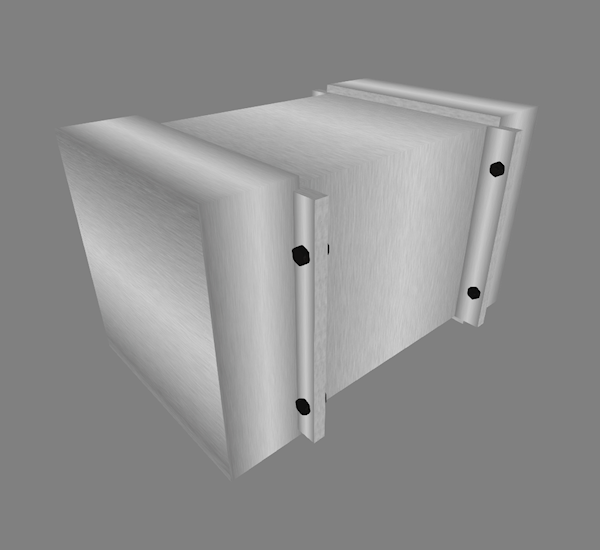 Complete chamber, assembled as if in use.
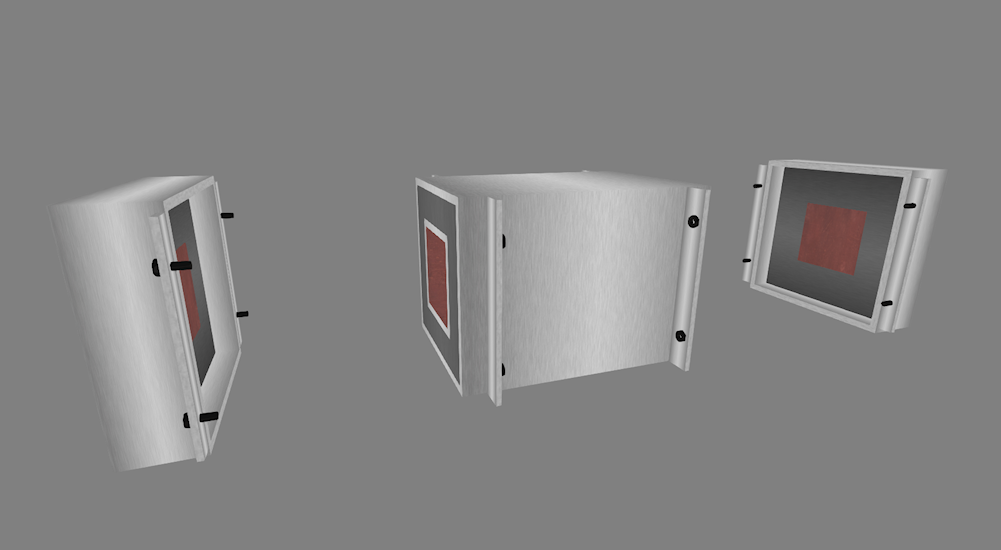 Chamber with both end caps detached.
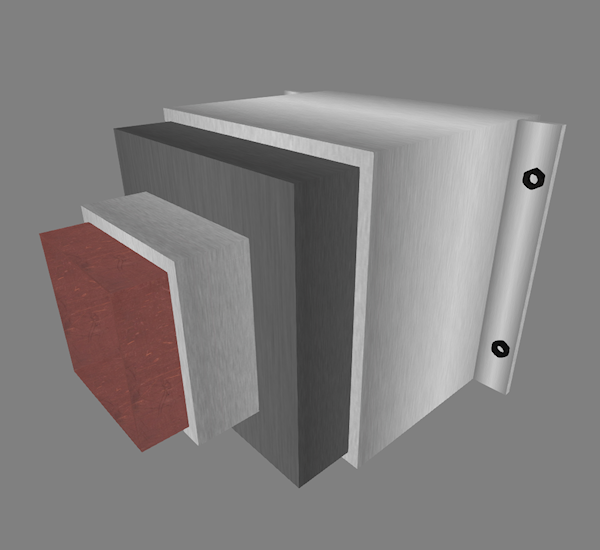 Cut-away view of the chamber showing 6mm steel on the outside, then 25mm of lead, then another 6mm steel, and finally 0.5-1mm of copper sheet lining the chamber.
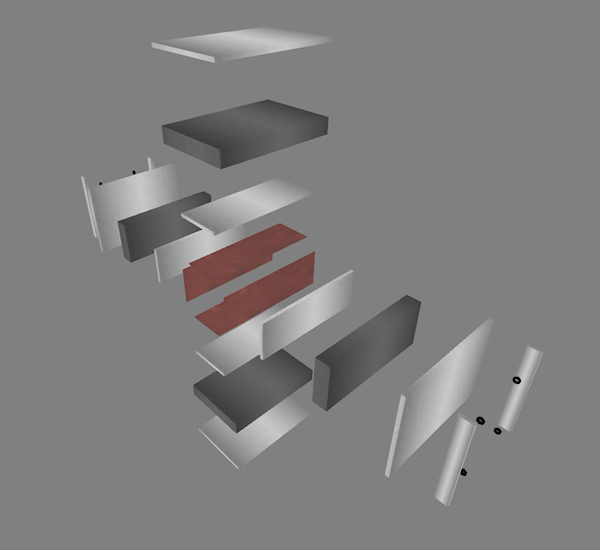 Exploded diagram of the chamber, for the nerdy.
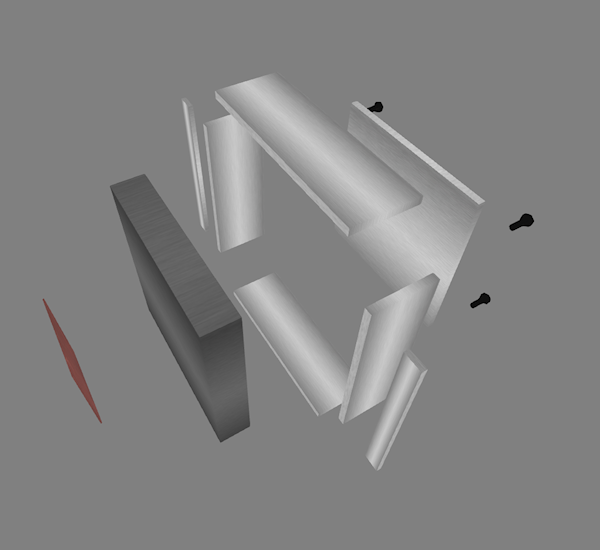 Exploded diagram of an end cap, for the nerdy.
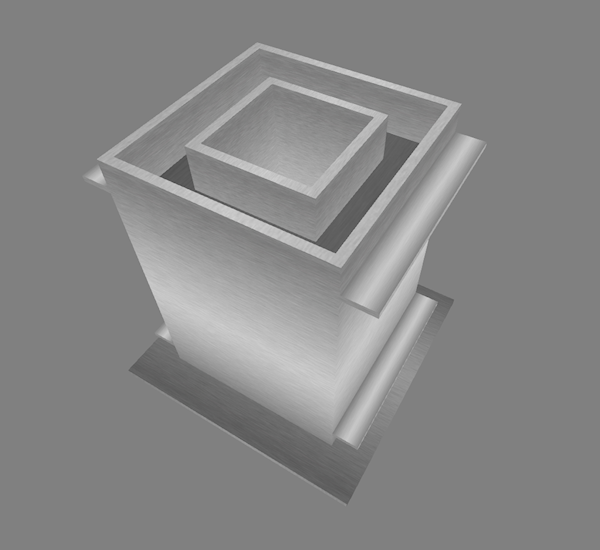 This picture shows the temporary plate on one end whilst filling with molten lead.
Whilst it is not lab grade, this should remove >90% of the background in the low energy range, which is ideal for sampling radioactive sources.
Archived from radmon.org - originally posted 06/04/2025
Add Comment
This policy contains information about your privacy. By posting, you are declaring that you understand this policy:
- Your name, rating, website address, town, country, state and comment will be publicly displayed if entered.
- Aside from the data entered into these form fields, other stored data about your comment will include:
- Your IP address (not displayed)
- The time/date of your submission (displayed)
- Your email address will not be shared. It is collected for only two reasons:
- Administrative purposes, should a need to contact you arise.
- To inform you of new comments, should you subscribe to receive notifications.
- A cookie may be set on your computer. This is used to remember your inputs. It will expire by itself.
This policy is subject to change at any time and without notice.
These terms and conditions contain rules about posting comments. By submitting a comment, you agree with these rules:
- Although the administrator will attempt to moderate comments, not all comments can be moderated at all times.
- You acknowledge that all comments express the opinions of the original author and not those of the administrator.
- You will not post material which is knowingly false, obscene, hateful, threatening, harassing or invasive of privacy.
- The administrator has the right to edit, move or remove any comment for any reason and without notice.
Failure to comply with these rules may result in being banned from submitting further comments.
These terms and conditions are subject to change at any time and without notice.
Comments