Blinky's Lab

Other Electronics

Anything electronic that doesn't fit in with radioactivity/Geiger counters

  • Posted on
    Featured Image
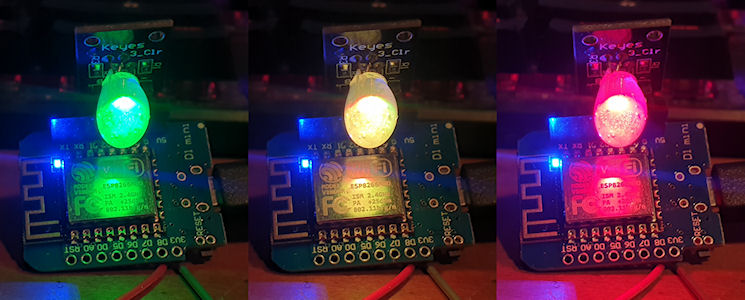
    Radmon.org Mini Monitor (lets me know when it is offline)
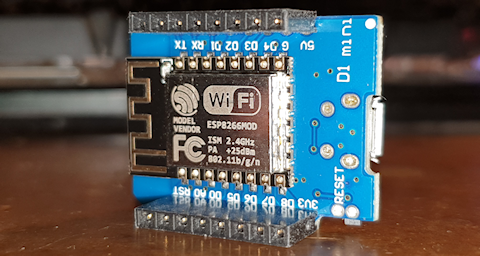
    I knocked up a simple monitor to easily see if radmon.org is up or down. It uses an ESP8266 (Wemos D1 mini clone) and a single RGB LED. It simply polls radmon.org by asking for a response from the server. If it gets the reply it is expecting in a timely manner it lights the LED green. If it doesn't get the reply it wants, or times out, the LED changes to orange and sets a fail counter +1. If it receives the correct reply again it goes back to green, but after 3 consecutive failures the LED lights red. There really isn't much more to it. There are positions in the code where an alarm or
  • Posted on
    Featured Image
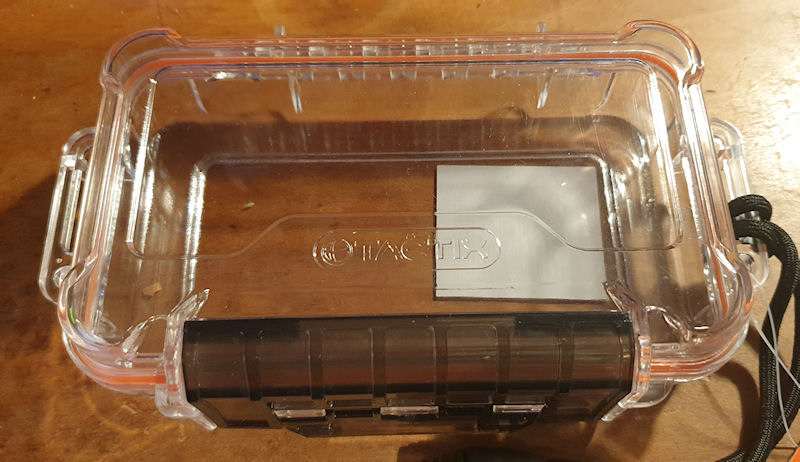
    Really Good Waterproof Project Case
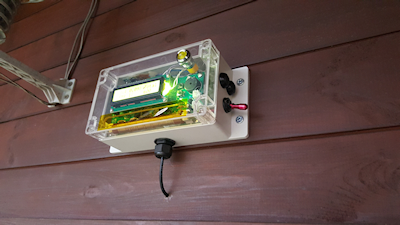
    I bought one of these cases from my local Asda for about £14 a few years back. I thought it was that good I went back a week later and they had sold out and they never came back into stock again. I had a little search about on the internet and found them on eBay and Amazon - links below. I bought one from eBay to see if it was the same quality, and it is exactly the same. It is a really neat case. Appears to be very waterproof, even air tight and strong. I think it is made from Polycarbonate. I used mine to house a GPS Geiger counter project some time ago. I think I will use another for an
  • Posted on
    Featured Image
    Change blue displays to yellow/amber easily and cheap
    A cheap and easy way to change a blue LCD or OLED display to yellow/amber using Kapton tape. I don't like blue displays. I never have done. I have always found them to be harsh on the eyes, especially in dark environments. I also find them more difficult to read than green or yellow displays. Blue is a colour that is rarely found in nature. It really was a colour that was/is quite unnatural to the eyes until recent times. It reduces melatonin release into the body and can affect sleep. I discovered some years back that Kapton tape can change blue displays into yellow/amber just by simply
  • Posted on
    Featured Image
    Arduino Uno, Mega2560 & Pro Mini + WizNet 5100 ethernet shield - Bare-bones code
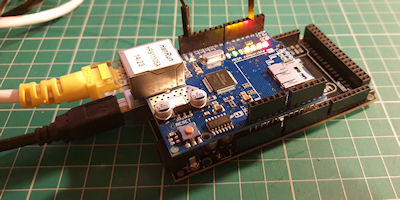
    ** Note: This is for submission of CPM readings to radmon.org. This was working at the time of writing but updates to libraries may cause issues. Here is some Arduino code for the Arduino Uno, Mega2560 and Pro Mini with WizNet W5100 ethernet shield. This is bare-bones code only. It does only these things: receives pulses on pin 2 (Uno, Mega & Pro Mini), calculates CPM and submits it to Radmon.org (via ethernet shield) every 60 seconds. It has a little debugging that can print to serial and I have also added CPM print to serial (much like the NetIO GC-10) that can be used with the Radlog
  • Posted on
    Featured Image
    ESP8266 - Wemos D1 Mini - Arduino Code - Bare-bones code, verified working
    ** Note: This is for submission of CPM readings to radmon.org. Here is some Arduino code for the ESP8266 written and tested on a Wemos D1 Mini. This is bare-bones code only. It does only these things: receives pulses on GPIO 13 (physical pin D7 on Wemos D1 Mini), calculates CPM and submits it to Radmon.org (via WiFi) every 60 seconds. It has a little debugging that can print to serial, flashes the internal LED when an interrupt event is detected and I have also added CPM print to serial (much like the NetIO GC-10) that can be used with the Radlog windows logging software - and that is it.
  • Posted on
    Featured Image
    Before the Thyristor, was the Thyratron!
    I was repairing an old Russian DP-5V counter yesterday and noticed an unusual neon/orange flashing glow coming from the probe PCB that I have never seen before, so decided to investigate. It is caused by two thyratrons on the board, flashing away with the clicks of the counter. They are similar to modern thyristors in their function. These thyratrons are filled with neon gas, hence their orange glow. This is from wikipedia: https://en.wikipedia.org/wiki/Thyratron Conductivity of a thyratron remains low as long as the control grid is negative relative to the cathode because the grid repels
  • Posted on
    Featured Image
    Wifi LED CPM Display for Displaying Radmon.org Station Count
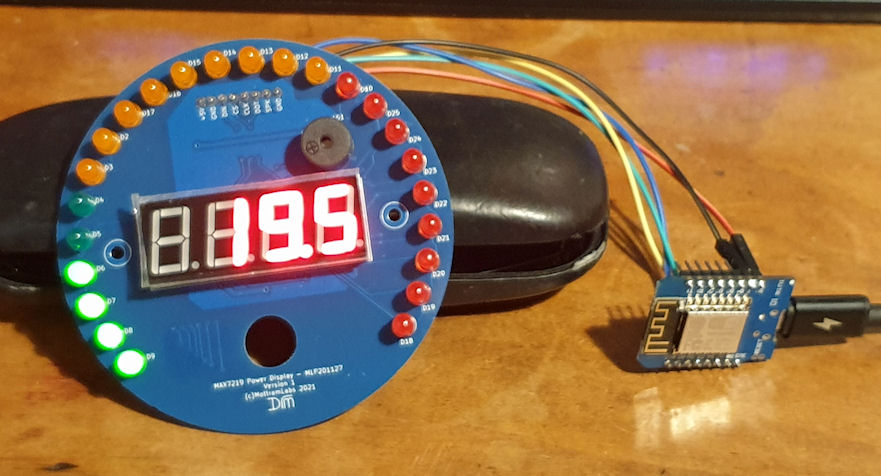
    [Updated: 22/12/2021] Its the first day of holidays and I'm bored already.... So I cooked up a neat wifi/wemos d1 mini/arduino/LED display for displaying a station's current CPM. It works by simply connecting to one's Wi-Fi and then goes to the URL, pulls the data, strips the first space and everything afterwards then converts what is left to a float (the CPM count from the start of the string) and displays it. The bar graph LEDs are mapped from 0 to 100 CPM at full scale deflection, but the 7 segment display will display up to 999.9 CPM, and after that will just display - - - - lol. It's
  • Posted on
    Featured Image
    SAS Super 90!!
    I have bought a 'PBI Microbial Air Sampler SAS Super 90' just for the simple fact it looked proper funky! I have no idea if it works, or how it works, or even exactly what it does, but bought it for shits and giggles. I paid £15. Working, they are going for about £1000! I care not for testing microbes in the air, so I figure I can make something with it. So far I have thought I can turn it into a ridiculously powerful flash light. Something around 100w LED. I could use a liquid cooler in the body, LED and smallish heatsink at the end, use the display for something, temperature, power and
  • Posted on
    Featured Image
    PM 2.5/10 Air Quality Monitor Using the SDS011 Sensor
    I've been working on an air quality monitor over the weekend. I have a working model that samples and logs every 5 minutes into various .csv files that are used for drawing graphs. It is a work in progress, still much to do. Take a look here: https://www.blinkyslab.co.uk/airquality/ Please ignore the data as it is not accurate as is just for testing purposes at the moment. I'll be dumping the collected data and starting from scratch when I get this into an enclosure and mounted properly outside. (All data shown on the page is good.) The hardware is very simple. An ESP8266 (Wemos D1 Mini), I2C